
Last updated November 16, 2026
 Architectural shingles
 Metal roofing
 Tile roofing
 GAF
 Owens Corning
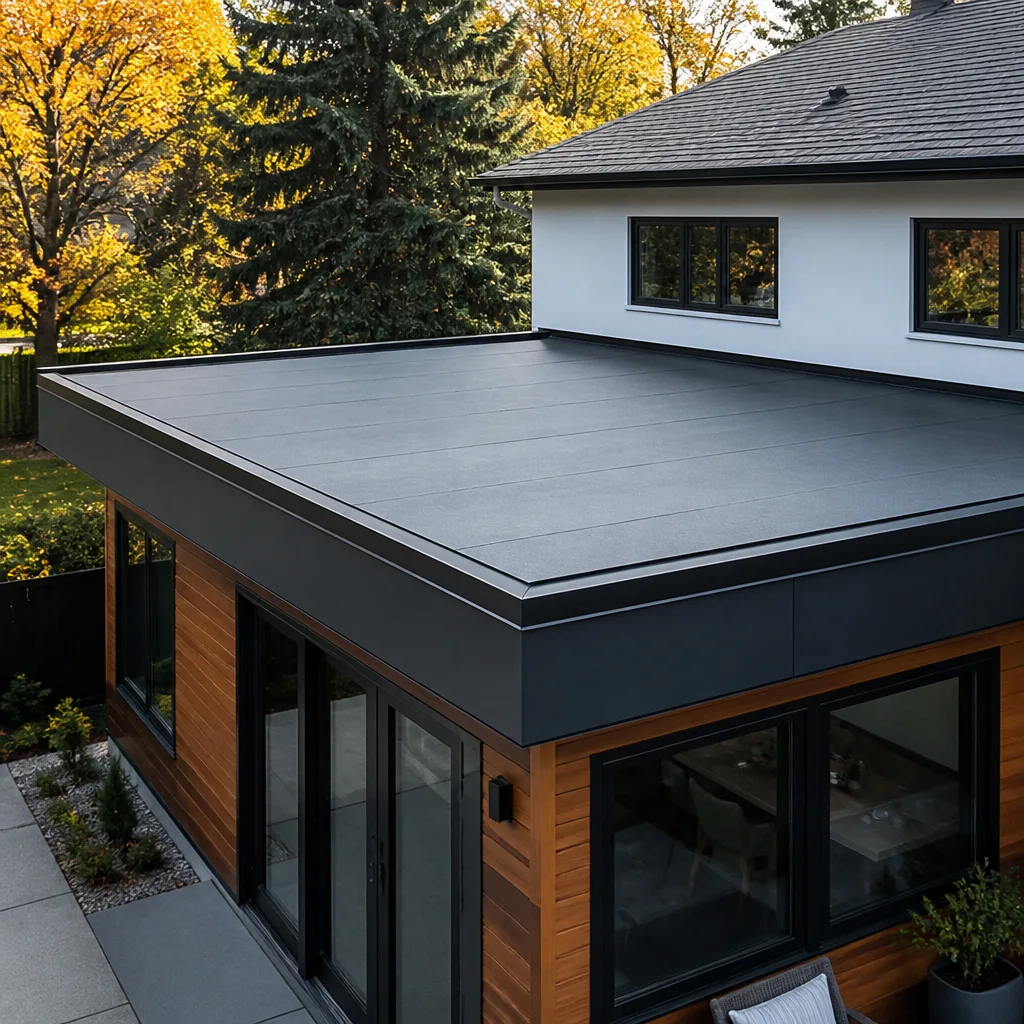 Flat & low-slope
Free roof inspection with deck photos before we talk money - GAF and Owens Corning certified installation
Roof Repair Troubleshooting in Fremont: Common Problems and How to Fix Them
A ceiling stain is a message, not a location. The water that shows up above your living room almost never entered through the shingles directly over that spot. Water runs along sheathing and rafters, sometimes for three to eight feet, before it finds a gap to drip through. That single fact explains why so many Fremont homeowners pay for a repair that doesn’t stop the leak the second time it rains. This guide teaches you to read your roof’s symptoms backward – from the drip point to the true entry point – before anyone climbs a ladder. You’ll learn the seasonal failure patterns specific to Fremont, how to tell three separate problems apart, and what to gather before a roofer arrives.
Quick Answer
Roof repair troubleshooting in Fremont starts with reversing your assumption: the water stain inside is where water exits, not where it enters. Trace the leak backward through the attic, match the symptom to the season (winter storm surge, summer UV damage, or fog-season moss), and identify whether you’re dealing with flashing, shingles, or condensation – each has a different fix and a different price.
Styles & brands we work with
- Architectural shingles
- Metal roofing
- Tile roofing
- GAF
- Owens Corning
- Flat & low-slope
Table of Contents
- The Water-Travel Principle: Why Your Leak Isn’t Where You Think
- Fremont’s Seasonal Failure Patterns: Winter, Summer, and Fog
- Flashing vs. Shingle vs. Condensation: Three Problems, Three Fixes
- Homeowner Checklist to Run Before the Roofer Arrives
- Red Flags in a Repair Quote
- What Roof Repair Typically Costs in Fremont
- Why a Standalone Inspection Changes the Diagnosis
- When to Call a Professional
The Water-Travel Principle: Why Your Leak Isn’t Where You Think
Water on a roof doesn’t obey gravity the way you’d expect. It follows the path of least resistance, which on most pitched roofs means running horizontally along the underside of sheathing and down the side of rafters before it drops. A roof repair call that starts with “the leak is above the stain” almost always starts in the wrong place. In our experience across Fremont neighborhoods like Mission San Jose, Centerville, and the older sections of Irvington, the actual entry point is routinely several feet uphill or sideways from the drip.
Here’s how to trace it backward:
- Get into the attic during or right after rain. Dry-weather detective work is guesswork. Water needs to be actively moving to show you its path.
- Take a strong flashlight and follow the wet trail upstream. Look for darkened sheathing, water tracks, or mineral staining on the wood – these are the highway the water took.
- Note every penetration and intersection uphill of the drip. Chimneys, plumbing vents, skylights, and valley flashings are the usual suspects, not the field of shingles.
- Mark the spot on the attic side with chalk. When you or a roofer goes up top, you’ll know exactly where to look on the roof surface.
- Check for a second leak. Multiple leaks often share a single entry point. One repair can solve both.
The most common error we see is a homeowner sealing a shingle directly above a stain and finding the leak returns on the next storm. That’s because shingle surfaces shed water well; it’s the transitions and penetrations that fail. Reading the attic first takes twenty minutes and saves you from paying for a repair in the wrong place.
Fremont’s Seasonal Failure Patterns: Winter, Summer, and Fog
Fremont’s climate has three distinct stressors that each target a different part of your roof, and knowing which one you’re dealing with narrows the diagnosis fast. The failure pattern shifts with the season, which means two homeowners with the same leak symptom in March and August may be dealing with completely different root causes.
Winter storm surge around chimneys and valleys. The rainy months deliver concentrated water volume at the exact places where roofs are most complex. A chimney’s counter-flashing and the valley where two slopes meet get hit hardest. Small gaps that stay dry all summer become active leaks under driving rain. If your leak appears in the first big storm of the season, look at flashings first.
Summer UV blister cracking on south-facing slopes. Fremont summers bake the south and west-facing roof planes. Asphalt shingles lose their volatile oils under sustained UV and can blister or crack along the granule surface. These failures show up as small blisters you can feel with your hand, and they tend to concentrate on the sunniest plane of the roof rather than spread evenly.
Fog-season moss and algae on north-facing sections. The cooler, damper months push moisture into shaded planes that never fully dry. Moss roots lift shingle edges; algae streaks indicate persistent moisture. North-facing slopes in the tree-covered parts of Niles and the hillside neighborhoods hold moisture far longer than the sunny planes, which is why moss tends to grow in patches rather than across the whole roof.
Match the symptom to the season and the compass direction, and you’ve narrowed the problem before anyone climbs up. That’s a real diagnostic advantage when you call.
Flashing vs. Shingle vs. Condensation: Three Problems, Three Fixes
Three very different problems produce nearly identical interior symptoms, and treating one as the other wastes money. We’ve seen homeowners spend on shingle replacement when the real issue was ventilation, and the reverse. Here’s how to tell them apart.
Flashing failure
Flashing is the metal that seals roof-to-roof and roof-to-wall transitions – around chimneys, at valleys, along sidewalls, and at skylight curbs. When flashing lifts, rusts through, or loses its sealant, water enters at the transition and travels. The tell: leaks that appear near vertical elements (chimney, wall, skylight) and worsen in wind-driven rain. Fix: reseal or replace the specific flashing section. This is usually a focused, moderate repair, not a roof-wide job.
Shingle failure
Shingle failure shows up as cracked, blistered, curled, or missing shingles, or as granules collecting in gutters. The tell: leaks that appear in a broad pattern across a plane, often after UV-heavy months, without an obvious penetration nearby. Fix: replace the affected shingles or the failed plane. If the failure is isolated, a repair is usually right. If it’s widespread across an aging roof, replacement is worth pricing alongside it.
Ventilation-driven condensation
Condensation doesn’t involve an opening in the roof at all. Warm, moist air from the living space hits a cold underside of roof sheathing, condenses, and drips. The tell: moisture appears on cold mornings or in still, humid weather, often as frost or dampness on the underside of the deck, and no leak shows up during actual rain. Fix: improve attic ventilation and air sealing, not roof surface work. This is the diagnosis most often missed because the symptom looks exactly like a leak.
Before calling anyone, ask yourself: did it leak during rain, or did it appear on its own? That one question separates the first two problems from the third. Once you know which bucket you’re in, the right fix – and the right roof repair scope – becomes much clearer.
Homeowner Checklist to Run Before the Roofer Arrives
The difference between a fast, accurate diagnosis and a slow one is often the information you hand over before the truck pulls up. Running this checklist protects your wallet and helps any roofer – including us – give you a tighter scope. You’re not doing the repair; you’re collecting facts.
- Photograph the interior stain from two angles. Include a tape measure or object for scale so growth over time is trackable.
- Mark the drip location in the attic. Chalk on the rafter or sheathing directly above the interior stain.
- Note the timing of when water appears. During rain, hours after rain, or independent of weather?
- Record the compass direction of the affected roof plane if you can see it. This narrows UV vs. moss vs. storm surge immediately.
- List any recent work on the roof, chimney, or skylights. New flashing and new penetrations are frequent culprits.
- Check the gutters for granule buildup – heavy granule loss points to shingle wear.
- Look for visible moss or dark streaks on the north-facing slope from the ground.
- Note any moisture or frost on the attic underside on cold mornings, which points to condensation rather than a leak.
Walk this list once, and you’ll be able to describe your problem with the kind of precision that saves troubleshooting time on both ends. Homeowners in Ardenwood and Warm Springs, where newer homes often have complex roof geometry, find this especially useful because there are more transitions and valleys to check.
Red Flags in a Repair Quote
A repair quote tells you how the roofer diagnosed the problem, even if the paperwork doesn’t say so directly. Some quotes reveal a contractor who looked at a stain from inside and guessed, rather than inspecting the roof deck and attic. Watch for these:
- No mention of the attic. If the quote never references an attic inspection, the diagnosis likely came from the ground or from the interior only.
- Work scope described only in the room where the stain is. The repair should be described at the roof surface, not the ceiling.
- A replacement recommendation with no repair option priced. The right call is to quote both options and let you decide – not to skip straight to replacement.
- No explanation of which problem was diagnosed. A good quote states whether it’s flashing, shingles, or ventilation. Vague scopes hide vague diagnoses.
- Sealing the shingle directly above the stain with no investigation uphill. This is the classic misdiagnosis.
- No mention of matching material. A repair should match the existing shingle profile and color, which is where multi-brand familiarity matters.
The pattern across all these red flags is the same: the contractor diagnosed from the symptom, not the source. When a quote is missing an inspection trail, ask what was found in the attic and at the roof surface. If the answer is vague, you haven’t been given a diagnosis – you’ve been given an estimate.
For broad context on what honest, whole-roof decisions look like, our guide to roof replacement walks through when a full replacement genuinely makes sense versus when it doesn’t.
What Roof Repair Typically Costs in Fremont
Roof repair pricing in Fremont depends on which of the three problem types you’re dealing with, how much material is involved, and whether the fix is at a single penetration or across a whole plane. These are typical estimated ranges for the common job types, and the written estimate you receive sets the final price for your specific roof.
| Repair type | Typical estimated range | Notes |
|---|---|---|
| Shingle replacement (isolated patch) | $250 – $750 | Small area, matching material |
| Flashing repair or replacement | $350 – $900 | Chimney, valley, or sidewall |
| Skylight flashing reseal | $300 – $800 | Depends on curb condition |
| Attic ventilation improvement | $500 – $1,500 | Condensation fix, not surface |
| Larger repair across a plane | $900 – $2,500 | Multiple shingles or sections |
Why the ranges are wide: two chimneys can have the same symptom but different flashing conditions, and two patch repairs can differ in how many shingle courses must be removed to match the surrounding plane. That’s why we recommend an inspection before any price is nailed down, and why we work with several manufacturers including GAF, CertainTeed, and Owens Corning – so a repair can match the existing roof rather than defaulting to whatever single brand a contractor carries.
The estimate is free, and the price is set per job by the written estimate. Ask for a line-item scope that names the problem type, the location on the roof, and the material being used. That level of detail is what separates a diagnosis from a guess.
Why a Standalone Inspection Changes the Diagnosis
Most “free roof estimates” are actually sales appointments with a coupon attached – the incentive is to walk away with a replacement contract, not to diagnose a repair. That’s why we offer inspection as a standalone service. It’s not a sales call disguised as an estimate. It’s a proper assessment of the deck, the attic, the flashings, and the ventilation, with a written report you can act on whether or not you hire us.
Here’s why that matters when you’re troubleshooting:
- You get a diagnosis, not a quote shaped around the biggest job. If the problem is condensation, we tell you. If it’s a flashing failure, we price the flashing.
- You get material options. When a repair is right, the repair should match what’s on the roof. Our familiarity with multiple shingle manufacturers means matching isn’t guesswork.
- You get continuity if the roof’s needs evolve. Inspection, repair, and replacement are all offered under one name, so you don’t re-shop or re-explain the history of your roof from scratch.
Homeowners who’ve been burned by upsell pressure from other roofers find this the single most useful part of the process: a clear, honest, written read on what’s actually happening up there. If you’re weighing your options in Fremont, the honest starting point is a diagnosis, not a bid.
Our technicians have up to 13 years of experience, which is where the material matching and the seasonal pattern recognition come from. That experience is the difference between a repair that holds through the next rainy season and one that lets you find the leak again in six months.
Common Mistakes to Avoid
- Sealing the shingle directly above the stain. Water travels along the deck before it drips – the leak you see may be six feet downhill from the actual failure. Sealing the wrong shingle wastes money and returns the leak on the next storm.
- Skipping the attic. The attic is where the water wrote its name. A diagnosis that never goes up there is a guess, not a read. Get into the attic during rain, follow the trail, and mark the spot.
- Treating condensation as a leak. Ventilation problems look exactly like roof failures but have a completely different fix. If water appears on cold mornings or absent rain, look at ventilation first – replacing shingles won’t help.
- Replacing a whole roof when a targeted repair is right. If the failure is isolated to one flashing or one plane, a focused repair is usually the honest call. Price both options and choose based on the diagnosis, not the pitch.
- Ignoring the season when troubleshooting. A leak in the first big winter storm points at flashing. A leak after a UV-heavy summer points at shingle cracking. A dark streak in the wet season points at moss or algae on the shaded plane. Match the symptom to the season.
- Hiring a roofer who quoted without a deck-level or attic inspection. The quote itself tells you the method. Read it for evidence of the investigation, not just the price.
- Forgetting that Fremont’s shaded planes hold moisture longer. Moss and algae on north-facing sections in tree-covered areas like Niles aren’t cosmetic – they lift shingle edges. Address the growth and the moisture, not just the symptom.
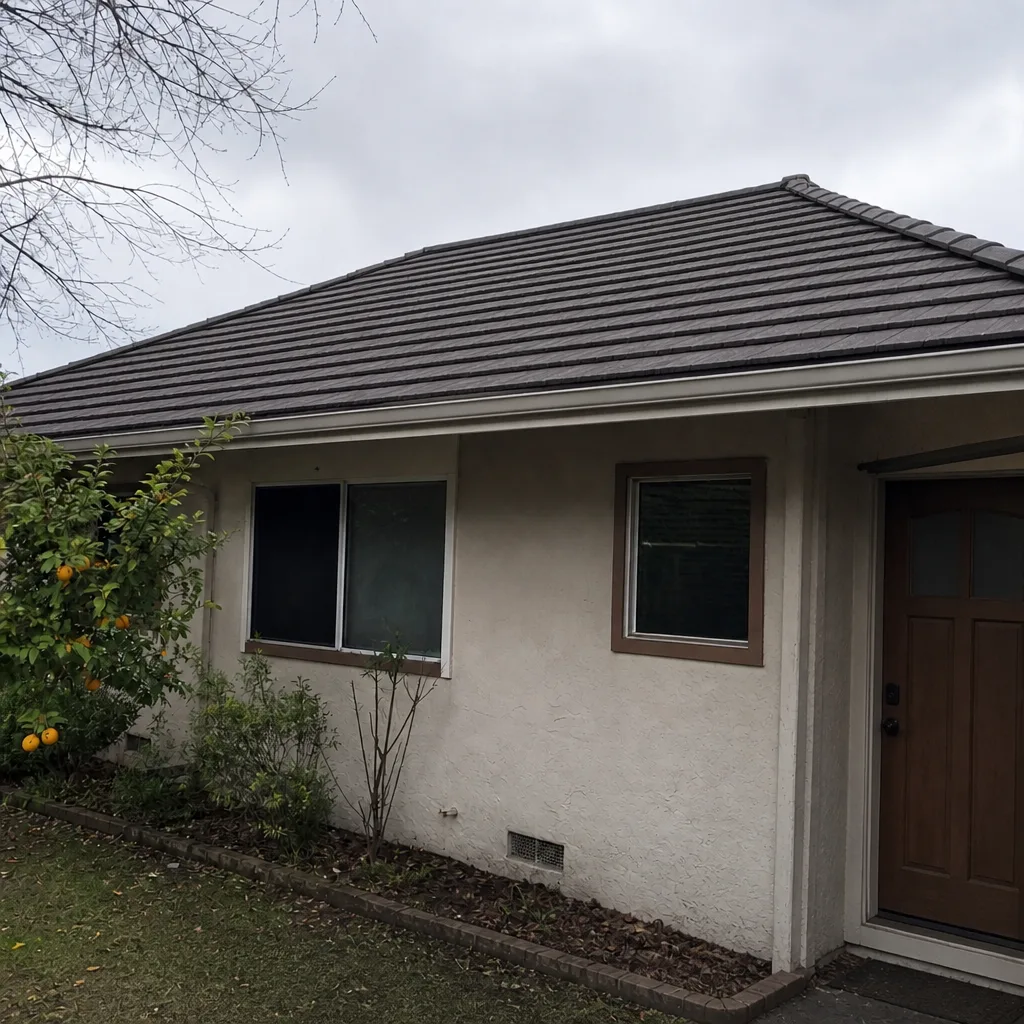
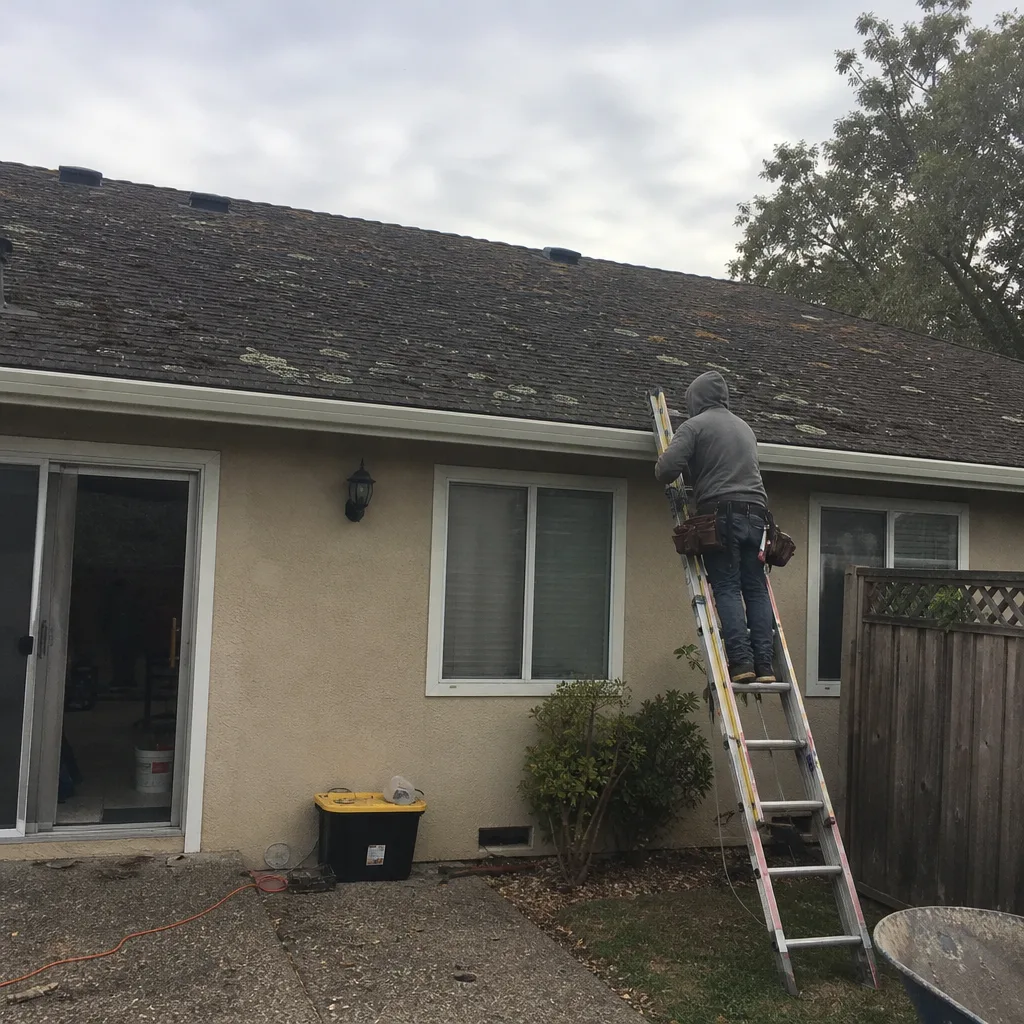
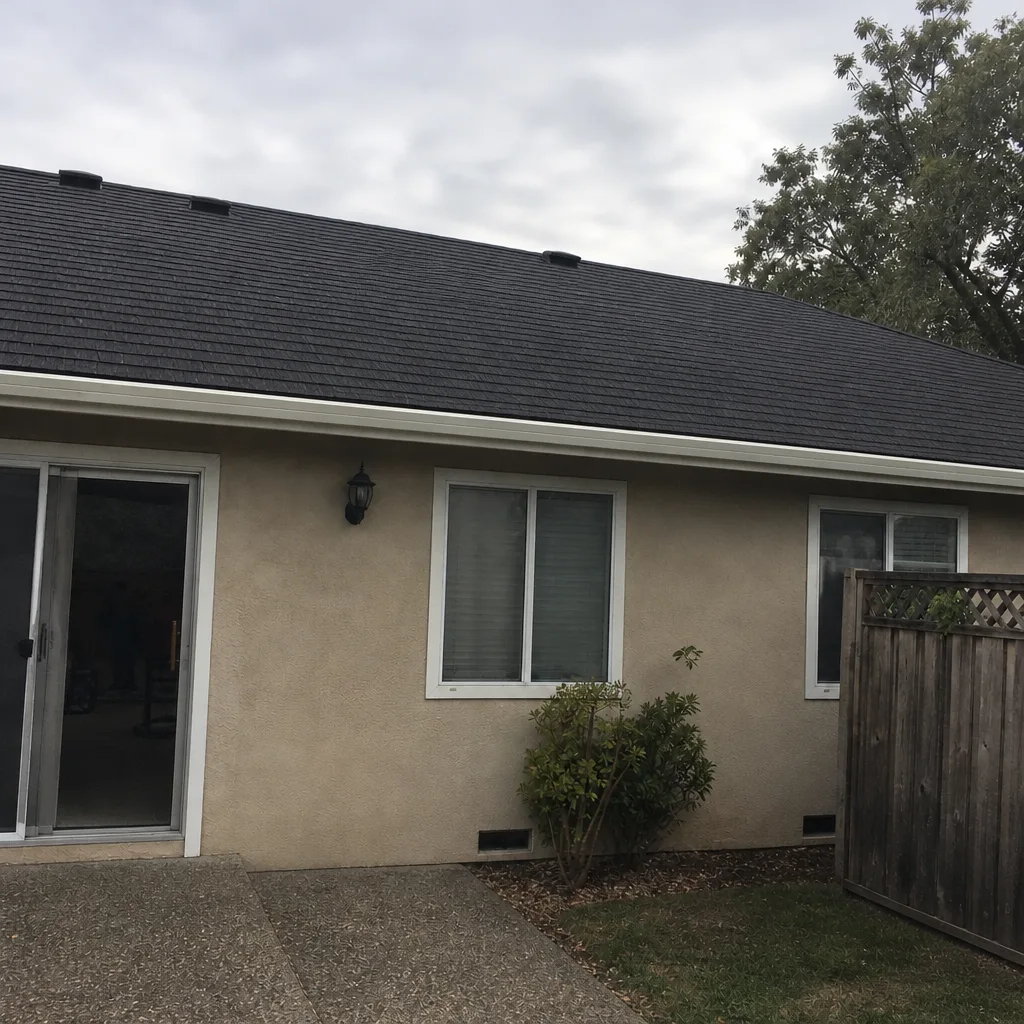
See the difference
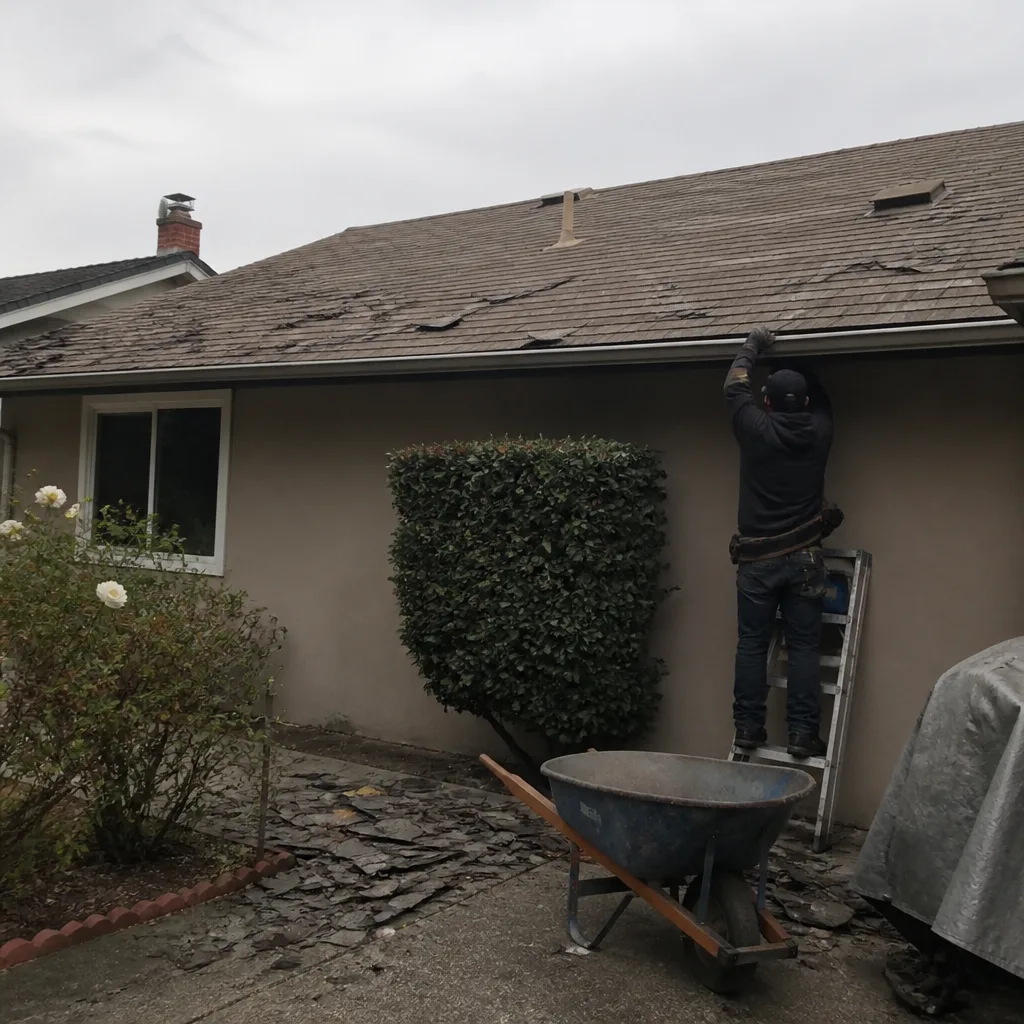 Before
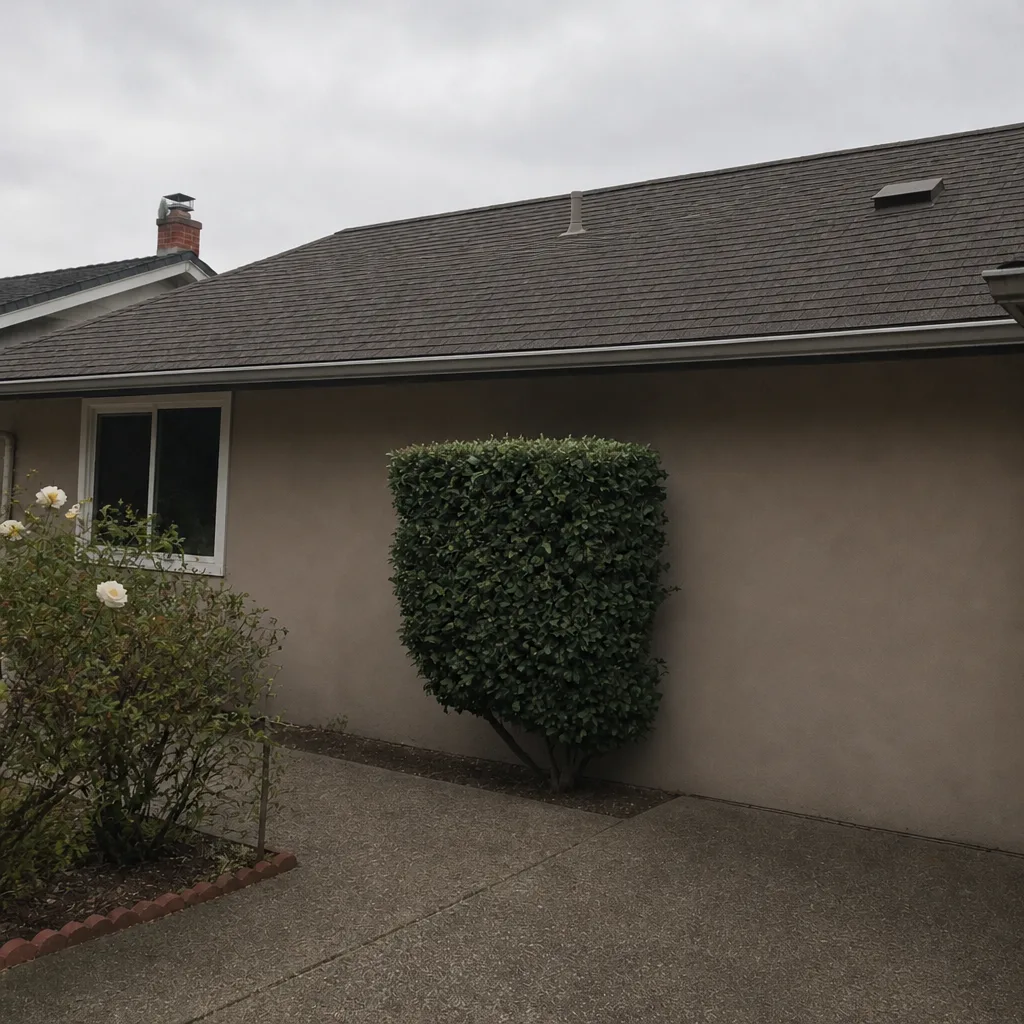 After
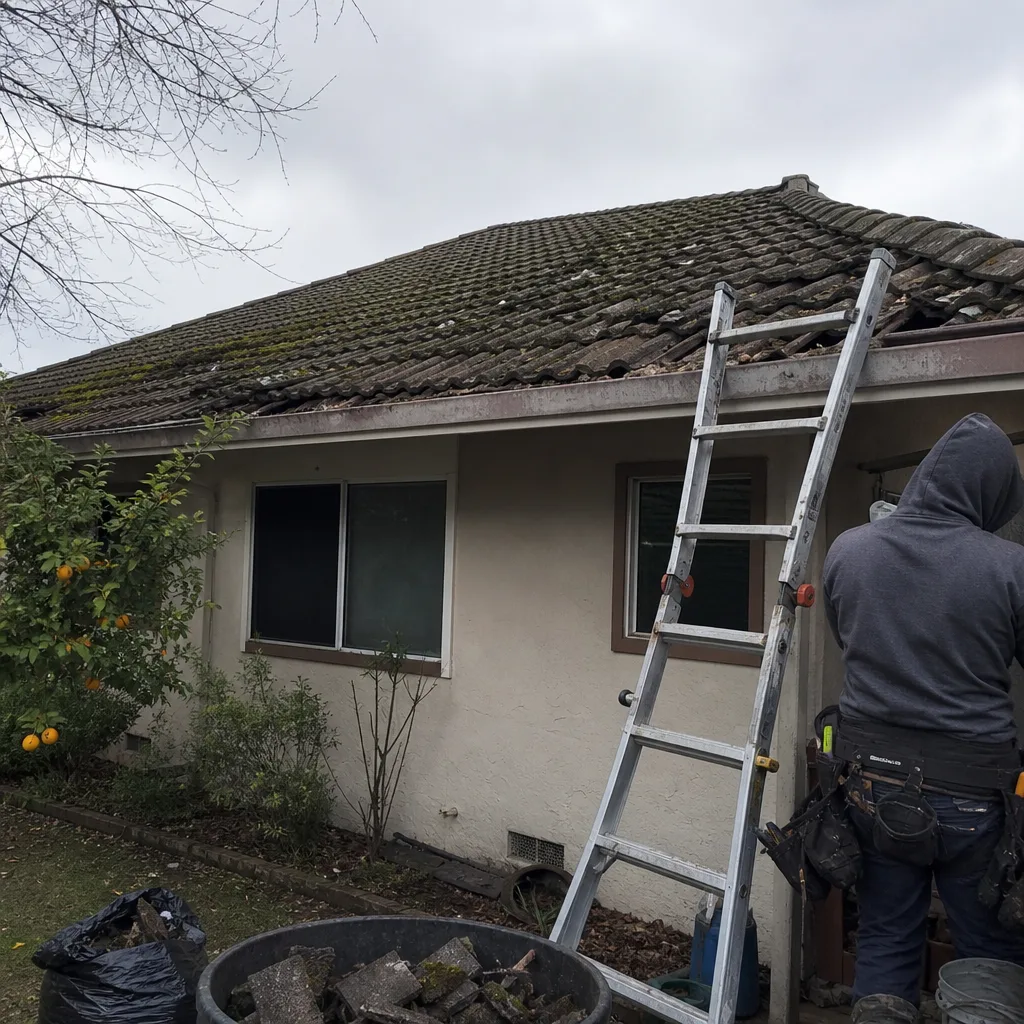 Before
 After
 Before
 After
When to Call a Professional
Some problems are worth diagnosing yourself – condensing humidity, a cosmetic moss patch, a single drip you can trace in the attic. But call a professional when the diagnosis leads to the deck, the flashings, or the shingles themselves. Roof work means ladders, heights, and physical risk, and a misdiagnosed repair is a repeat leak. Call us when: you can’t trace the leak in the attic; the leak appears at a chimney, valley, or skylight; you see cracked or missing shingles across a plane; you’re seeing moisture you can’t explain; or you want a written diagnosis before you decide what to do. Denali Roof Repair offers free estimates in Fremont. Call (833) 449-5604. We answer 24/7. Fast dispatch from 7am to 7pm, Sunday through Friday.
Frequently Asked Questions
Because the repair was almost certainly done at the stain location rather than at the true entry point. Water travels along sheathing and rafters for three to eight feet before it drips, so sealing the shingle directly above the stain leaves the actual leak uphill untouched. Call (833) 449-5604 for a diagnosis that traces the leak back to the source – estimates are free.
Typical estimated ranges run from about $250 to $750 for an isolated shingle patch, $350 to $900 for flashing repair, and up to $2,500 for a larger repair across a plane. Actual pricing depends on how much material is involved and where the fix sits on the roof. The written estimate sets the final price. Call (833) 449-5604 for an exact quote – estimates are free.
Often, yes – if the diagnosis is clear enough to scope on the spot, a focused repair like flashing or a single patch can usually be completed in one visit. Larger repairs or ventilation work may need a return trip for materials. Call (833) 449-5604 to discuss timing; we answer 24/7, with fast dispatch from 7am to 7pm, Sunday through Friday.
No, the written estimate sets the price for the scope we’ve agreed to. If we open up a repair and find something the inspection didn’t reveal, we stop, show you what we found, and re-scope with your approval before continuing. We don’t add change orders to work you didn’t approve. Call (833) 449-5604 to schedule your free estimate.
Timing is the giveaway. If moisture appears during actual rain – especially wind-driven rain near a chimney, wall, or valley – that points to a leak at a flashing or shingle failure. If it appears on cold mornings, in still humid weather, or without any rain at all, it’s likely condensation from attic ventilation, which is fixed with ventilation, not roof-surface work. Call (833) 449-5604 for a diagnosis that tells the two apart – estimates are free.
Most cities require a permit for structural or large-scope roof work and often for full replacement, so we advise asking the city’s building department directly about your specific project. For repairs, the permitting threshold varies by scope. We’ll tell you honestly whether your job is likely to require one and factor it into the written estimate. Call (833) 449-5604 to talk through the scope.
The Bottom Line
The single most useful troubleshooting skill on any roof is learning to distrust the stain. The water inside your home is the exit, not the entrance, and the actual failure is usually some distance uphill at a transition, a flashing, or a ventilation problem. Trace it backward through the attic during rain. Match the symptom to Fremont’s seasons – winter storm surge, summer UV damage, fog-season moss. Separate flashing, shingles, and condensation, because each has its own fix and its own honest price. Then ask for a quote that proves the diagnosis with a deck-level and attic inspection. That’s how you avoid paying for a repair in the wrong place. See how we approach Fremont roofs, and when you’re ready for a real diagnosis, call (833) 449-5604. We answer 24/7. Fast dispatch from 7am to 7pm, Sunday through Friday.
Written by the team at Denali Roof Repair.