
Last updated November 16, 2026
 Metal roofing
 Architectural shingles
 Tile roofing
 GAF
 Owens Corning
 Flat & low-slope
Free roof inspection with deck photos before we talk money - GAF and Owens Corning certified installation
Roofing Emergency Preparedness Guide for Fremont Homes
Most roof damage from a big storm is decided before the rain ever starts. By the time water is dripping into a hallway, the shingles, flashing and seals above it have already been losing the fight for months, and the storm just finishes the job. Fremont sits between the bay and the hills, and our wet season arrives in a handful of heavy atmospheric river events rather than a slow, even drizzle. That means the difference between a nuisance leak and a torn-up ceiling usually comes down to what a homeowner did in the calm days before the front moved in. This guide walks through a pre-storm window you can actually use, how to document your roof so an adjuster sees it clearly, when tarping helps and when it hurts, and how to spot the wrong contractor at your door. We’ve spent years inspecting and repairing roofs around Fremont, and the pattern is consistent: preparation beats panic every time.
Quick Answer
The best roofing emergency preparedness for a Fremont home is a documented pre-storm inspection, cleared gutters and drains, checked pipe boots and flashing, and a plan for temporary protection, all done before the rain arrives. Atmospheric river events give roughly 48 to 72 hours of warning through weather services, and that window is enough to reduce damage and speed up any insurance claim. If you’re unsure where your roof stands, a standalone inspection is the honest starting point.
Styles & brands we work with
- Architectural shingles
- Metal roofing
- Tile roofing
- GAF
- Owens Corning
- Flat & low-slope
Table of Contents
- Why the Pre-Storm Window Matters More Than the Storm
- The Two-Hour Pre-Storm Checklist for Fremont Roofs
- How to Document Your Roof Before a Storm
- Emergency Tarping: When It Helps and How to Get It Right
- What the Contractor Queue Looks Like After an Atmospheric River
- Contractor Fraud Patterns in Alameda County After a Storm
- What Happens When You Call
- Repair or Replace: Choosing Honestly Under Pressure
Why the Pre-Storm Window Matters More Than the Storm
Roof emergencies rarely begin at the moment water appears inside. They begin with small openings that have been quietly failing: a cracked pipe boot, a lifted section of flashing, a clogged valley, a gutter packed with debris from the last dry spell. When a heavy atmospheric river event hits the Fremont area, those small failures turn into water paths fast. The window before the storm is when you can close those openings or, at minimum, plan around them.
Here’s the part most guidance skips. The actions that do the most good are not the dramatic ones. It isn’t rushing onto the roof with a caulking gun. It’s clearing what channels water away, confirming where the vulnerabilities are, and having a documented baseline so that when damage does occur, you can show exactly what changed. Weather services typically give Fremont two to three days of notice before a major atmospheric river makes landfall, and that’s enough time for a meaningful once-over. Insurers and adjusters treat a clear “before” record as far more credible than a “during” panic photo.
In our experience, homeowners who take even a couple of hours before a storm ends up with faster, cleaner claims and fewer avoidable interior repairs. The ones who wait until water is running down a wall are reacting to damage that was, in many cases, preventable. That’s the whole argument for preparedness: you’re not stopping the storm, you’re removing the weak points it exploits. And a roof that’s inspected and maintained in Fremont’s wet-dry rhythm simply has fewer of them.
The Two-Hour Pre-Storm Checklist for Fremont Roofs
You don’t need a full day to make a real difference. This checklist is built to be done in under two hours, and it’s organized by return on time: the tasks at the top reduce the most damage for the least effort. Do them from the ground or from a window where you can see safely. Anything that requires getting up on the roof itself is a job for a trained professional, not a homeowner on a wet or windy afternoon.
- Clear the gutters and downspouts (highest return). Clogged gutters are the single most common cause of preventable water intrusion around Fremont homes. Water that can’t drain backs up under the roof edge and finds the fascia and walls. Clear debris from the ground with a long tool or hose where you can reach safely.
- Check the pipe boots and flashing from below or with binoculars. The rubber boots around plumbing vents and the metal flashing at walls and chimneys are common leak points. Look for cracks, lifted edges or gaps. Don’t climb up to fix them yourself; just note where the weak spots are.
- Test interior drainage on flat or low-slope roof sections. Some Fremont homes have flat or low-slope additions and garages. Confirm that scuppers and drains are clear so ponding water has somewhere to go.
- Clear valleys of debris. Where two roof planes meet, debris collects and water concentrates. A clear valley drains; a blocked one backs up.
- Check attic and ceiling for existing stains. Note any current water marks before the storm so you can tell new damage from old. This ties directly into documentation.
The order matters. Gutters and drainage first, then the known leak points, then flat-roof drainage, then a baseline of what’s already there. Pipe boots are worth emphasizing because they fail quietly and so often: a boot that has gone brittle can let water straight into a ceiling. If a boot looks questionable, that’s a strong reason to book a proper look before the next front arrives.
How to Document Your Roof Before a Storm
Documentation is the part homeowners skip, and it’s the part that pays off most when a claim is filed. A roof condition record made before a storm gives an adjuster a clear baseline: what was intact, what was already aging, and therefore what the storm actually caused. Here’s how to build one that’s useful rather than just a camera roll of blurry shingles.
- Use timestamps. Your phone’s camera records the date and time automatically. Keep that metadata intact rather than cropping or screenshotting, which can strip it.
- Add location context. A geotagged photo, or even one clearly showing the house and a recognizable feature, ties the image to your property. A photo of shingles with no location and no timestamp is easy for an adjuster to discount.
- Shoot wide and close. A wide shot shows the roof section in context; a close shot shows the specific condition. Both, for each concern area.
- Cover the usual angles adjusters examine. Roof fields (the broad surfaces), valleys, flashing at walls and chimneys, pipe boots, gutters and downspouts, and the interior ceilings and attic for existing stains.
- Write short notes with each set. “Gutter clear on the north side,” “boot at back vent looks cracked,” “existing stain in hallway ceiling.” Plain descriptions do more than adjectives.
- Keep it in one place. A single folder or album, dated, so it’s ready if you ever need it.
The reason this works is that a claim is a question of cause. An adjuster wants to know what the storm did versus what wear and age had already done. Your “before” record answers that question in your favor when the roof was in good shape, and it keeps expectations honest when it wasn’t. In our experience, a documented roof makes for a much smoother conversation on both sides. If you want a neutral third party to record condition properly, a standalone Denali Roof Repair inspection does exactly that without turning into a sales pitch.
Why Pre-Storm Records Change Claim Outcomes
The gap between a well-documented home and an undocumented one isn’t about getting more than you’re owed; it’s about clarity. Storm damage claims slow down when there’s no baseline, because the adjuster can’t separate old wear from new impact. A dated, located, plainly described record removes that ambiguity. Do it once, keep it current, and the next claim starts from a much better footing.
Emergency Tarping: When It Helps and How to Get It Right
Tarping is a temporary shield, not a repair, and the distinction matters for both your roof and your claim. It’s appropriate when there’s an active breach letting water in and the storm isn’t done, when a section of shingles or flashing has been compromised, or when you need to protect the interior until a proper fix can be scheduled. It is not appropriate as a permanent fix, and it can do more harm than good if done carelessly.
The risks of a bad tarp job are real. Weighted materials can shift and abrade shingles, fasteners can open new holes, and a tarp left flapping in wind can tear away and expose more of the roof than before. And crucially, getting up on a roof in wind and rain is genuinely dangerous. This is height work on a wet surface, and it’s a leading cause of serious injury for untrained people. We flag that plainly because the safest call is usually to protect from the ground and get a trained technician up as soon as conditions allow. If you’re ever unsure, don’t climb; call.
Making Tarping Reimbursable Under a Standard Policy
Many standard homeowners policies (an HO-3 is the common form) treat temporary protective measures as reimbursable when they’re reasonable and directly tied to covering damage from a covered event. To make sure a tarping cost is recoverable, keep the paper trail tight:
- Keep the invoice or receipt showing what was done and when.
- Photograph the affected area before and after the temporary protection.
- Note the date and the storm it responded to.
- Tell your insurer promptly that you took protective measures, and follow their instructions on claims.
We can’t speak for every policy, so confirm the specifics with your insurer. But the general principle holds: reasonable temporary protection, documented and reported, is far easier to reimburse than guesswork. When you need it done safely, roof repair that includes an inspection-first approach is where to start, because a good crew will tell you whether tarping is even necessary before anyone touches your roof.
What the Contractor Queue Looks Like After an Atmospheric River
Here’s the reality of Fremont roofer availability after a major atmospheric river event: demand spikes fast. When a big front moves through the region, the phone lines at every roofing outfit light up at once, and the honest ones book up in the order calls arrive. The homeowners who get prompt service aren’t the ones who call during the storm. They’re the ones who already have a relationship and a documented roof condition on file, so their repair is scoped quickly rather than starting from scratch.
The practical takeaway is to get onto legitimate emergency rosters before you need them. That means:
- Get an inspection while it’s dry. A pre-storm look establishes your roof’s condition and any weak points, so a future call starts from known ground.
- Keep your documentation together. A dated record shortens the scoping conversation and supports any claim.
- Know who you’d call. Identify a contractor you’ve vetted ahead of time rather than picking from whoever knocks during the storm.
- Book preventive work when there’s no storm. Small fixes like boots and flashing are far easier to schedule in a dry week.
The queue after a storm isn’t a conspiracy, it’s simple math: more damage than crews, at once. The way to beat it is to not be in it. If a roof is already showing wear, addressing it before the next front means you’re not competing for attention when the region is saturated with leaks.
Contractor Fraud Patterns in Alameda County After a Storm
Storm events bring out both the best and the worst of the trades. After a major weather event in Alameda County, expect door-knockers. Most are legitimate, but the fraud patterns are consistent enough to learn by heart. Here’s what to watch for and how to verify anyone who shows up within a day or two of a storm.
Red Flags to Recognize
- Assignment of benefits (AOB) pressure. This is when a contractor asks you to sign over your insurance rights so they can deal with the insurer and bill them directly. It’s a red flag, especially when pushed urgently. Be very cautious about signing one.
- Unlicensed storm chasers. Out-of-area crews that appear right after a storm and vanish just as quickly. They may offer a deal that’s too good, demand cash up front, or want to start immediately before any paperwork.
- High-pressure urgency. “Sign today or the price goes up.” Legitimate contractors give you time to think.
- No verifiable business presence. Ask for a business name, and confirm it independently rather than trusting a business card.
- Large cash deposits. Reasonable deposits exist, but a demand for a big cash payment before work begins is a warning sign.
How to Verify Someone at Your Door
- Get the company’s legal name and check it against the state contractor licensing board (the Contractors State License Board in California) rather than a card or a flyer.
- Ask to see proof of a valid license and confirm the number independently.
- Request a written, itemized estimate before any work begins.
- Decline to sign an assignment of benefits on the spot.
- Compare more than one quote when there’s time; a real contractor won’t be offended.
We’re deliberate about this at Denali Roof Repair: an inspection first, options explained honestly second, and a written scope before anything starts. The right contractor wants you to understand exactly what you’re buying. If someone won’t put it in writing, that tells you what you need to know.
What Happens When You Call
When you call us about a roof concern, the first step is almost never a pitch for a new roof. It’s finding out what’s actually happening. A trained technician looks at the roof’s condition, the known weak points, and any interior signs, then explains what’s going on in plain terms. From there we lay out the realistic options: what can be cleaned or repaired, what needs temporary protection, and whether there’s anything that genuinely points toward replacement. You get a free estimate with the scope in writing, and the written estimate sets the final price. No surprise change orders.
Our technicians have up to 13 years of experience, and we work with seven major roofing manufacturers. GAF, CertainTeed, Owens Corning and others are all on the table, which means the material recommendation follows the job rather than whatever a single-brand shop pushes. We don’t sell from one inventory. We match the material to the roof, the slope and the budget. Call (833) 449-5604. We answer 24/7. Fast dispatch from 7am to 7pm, Sunday through Friday.
Repair or Replace: Choosing Honestly Under Pressure
The most expensive roofing decision a homeowner can make isn’t always the right one, and under storm pressure it’s easy to get talked into a full replacement when a targeted repair would do the job. Our rule is simple: repair when repair is right, replace when replace is right. The only way to know which is which is to inspect first and scope honestly. An inspection isn’t a sales call dressed as a free quote. It’s a diagnosis.
When a roof has isolated damage, a repair that addresses the actual failure often restores it for years. When the failure is broad, or when the roof is genuinely at the end of its working life across many areas, a replacement can be the more sensible spend. The difference between those two situations should be shown to you, not just asserted. That’s why our inspection is a standalone service. It stands on its own merits, and you can take the findings and act on them however you like. If you’re facing a decision under pressure, a calm second look is worth far more than a fast signature. If a roof replacement does turn out to be the honest answer, it’s still the job of the inspection to prove it first, not the other way around.
Common Mistakes to Avoid
- Waiting until water is inside to act. The moment a leak shows up indoors, the damage behind it is already underway. The pre-storm window is what you actually have, so use it.
- Climbing onto a wet roof in a storm. Height work on a slick, windy surface is genuinely dangerous and a common cause of serious injury. Protect and document from the ground, then get a trained technician up when conditions allow.
- Skipping the “before” documentation. Without a dated, located record, an adjuster can’t easily separate old wear from storm damage, and the claim slows down or gets discounted. It’s the cheapest insurance you can buy.
- Signing an assignment of benefits on the spot. Handing over your insurance rights under pressure after a storm is one of the classic mistakes in Alameda County. Read it, and don’t sign hurriedly.
- Hiring whoever knocks first. Storm chasers appear and vanish. Verify a license and get a written, itemized estimate before you commit to anyone.
- Letting a tarp become the repair. A tarp is temporary protection. Left on through a season, it abrades shingles and hides a problem that’s only getting worse.
- Accepting a single-brand pitch. When a roofer pushes one manufacturer’s product, that’s often inventory talking, not your roof. Genuine choice across brands keeps the recommendation honest.
See the difference
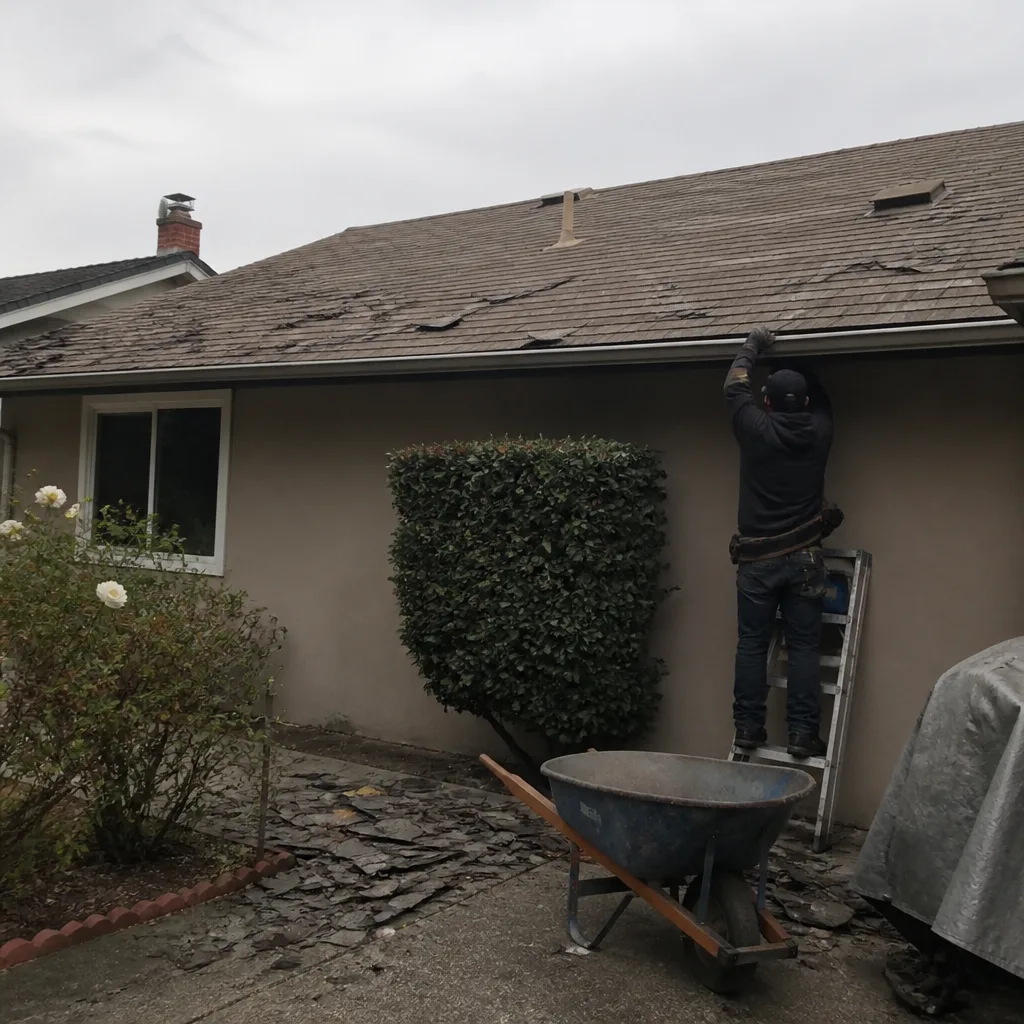 Before
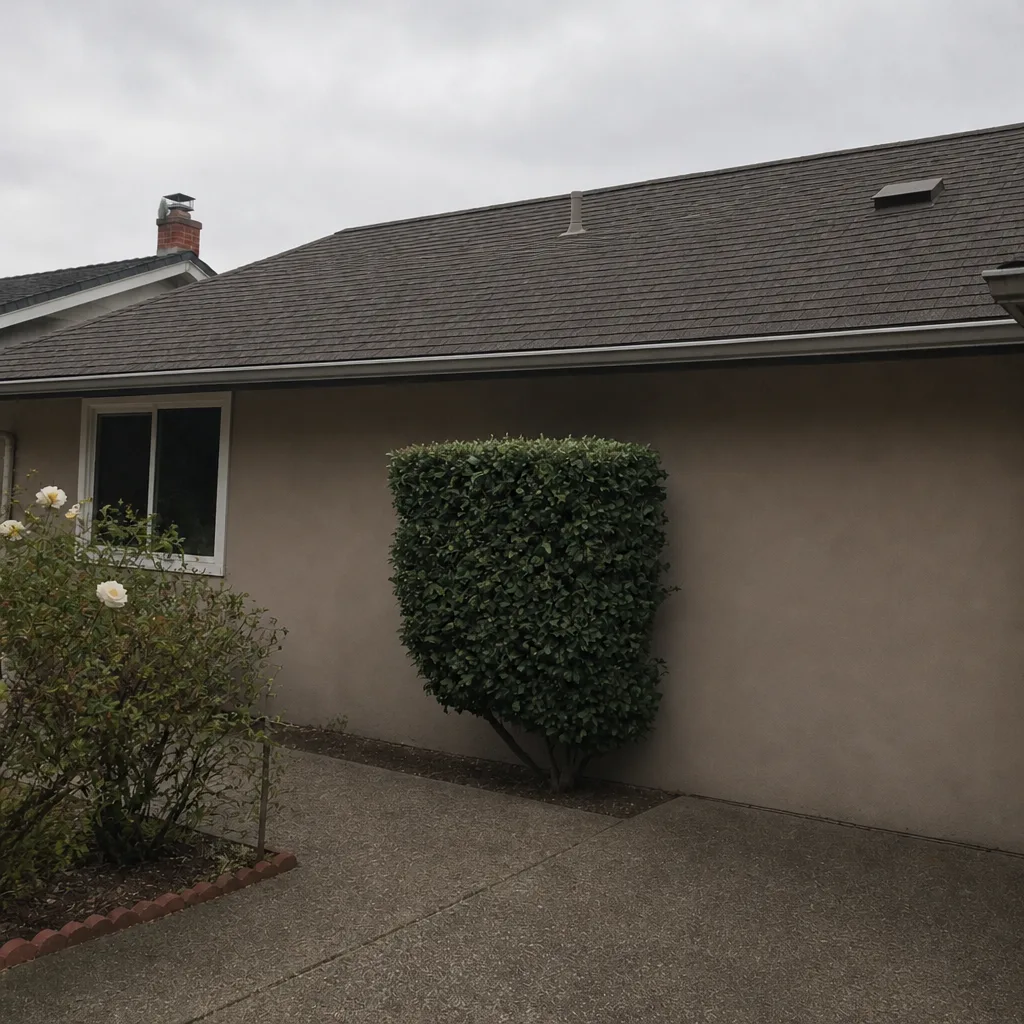 After
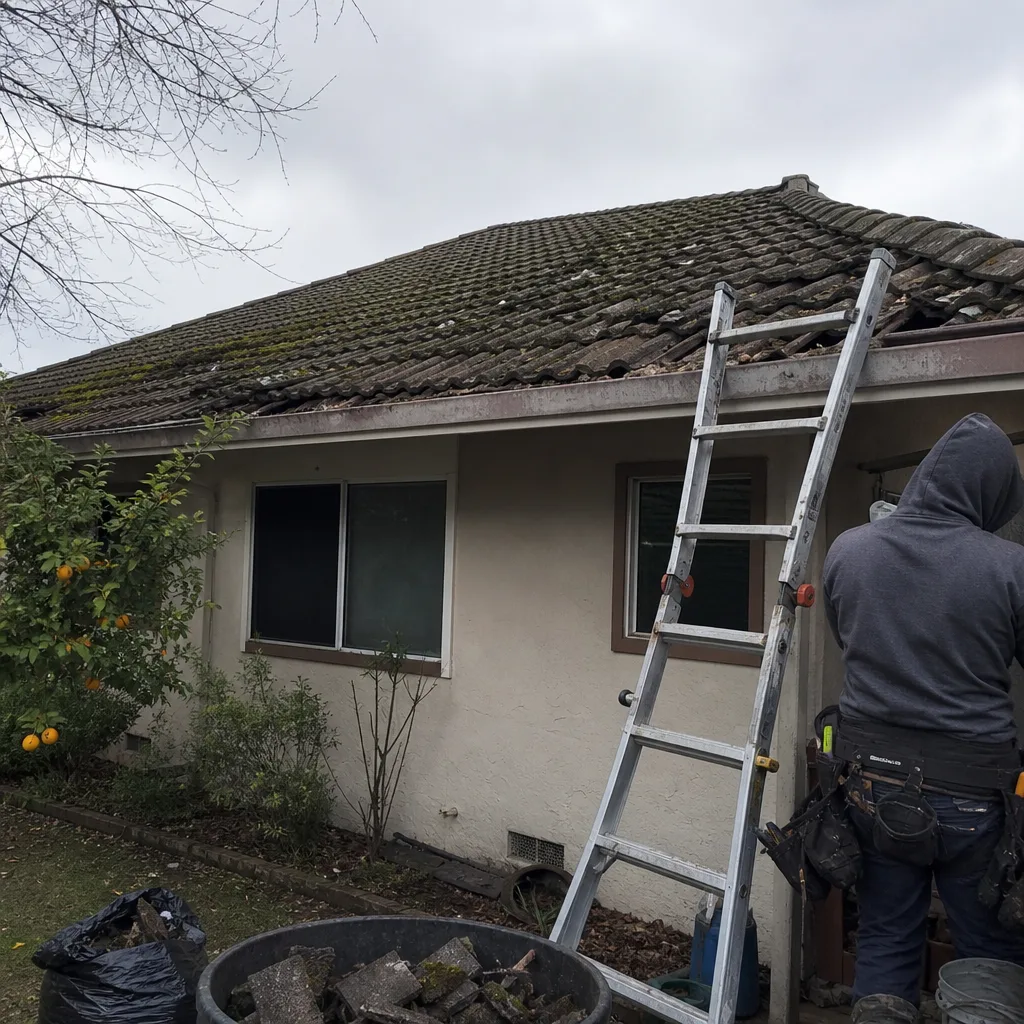 Before
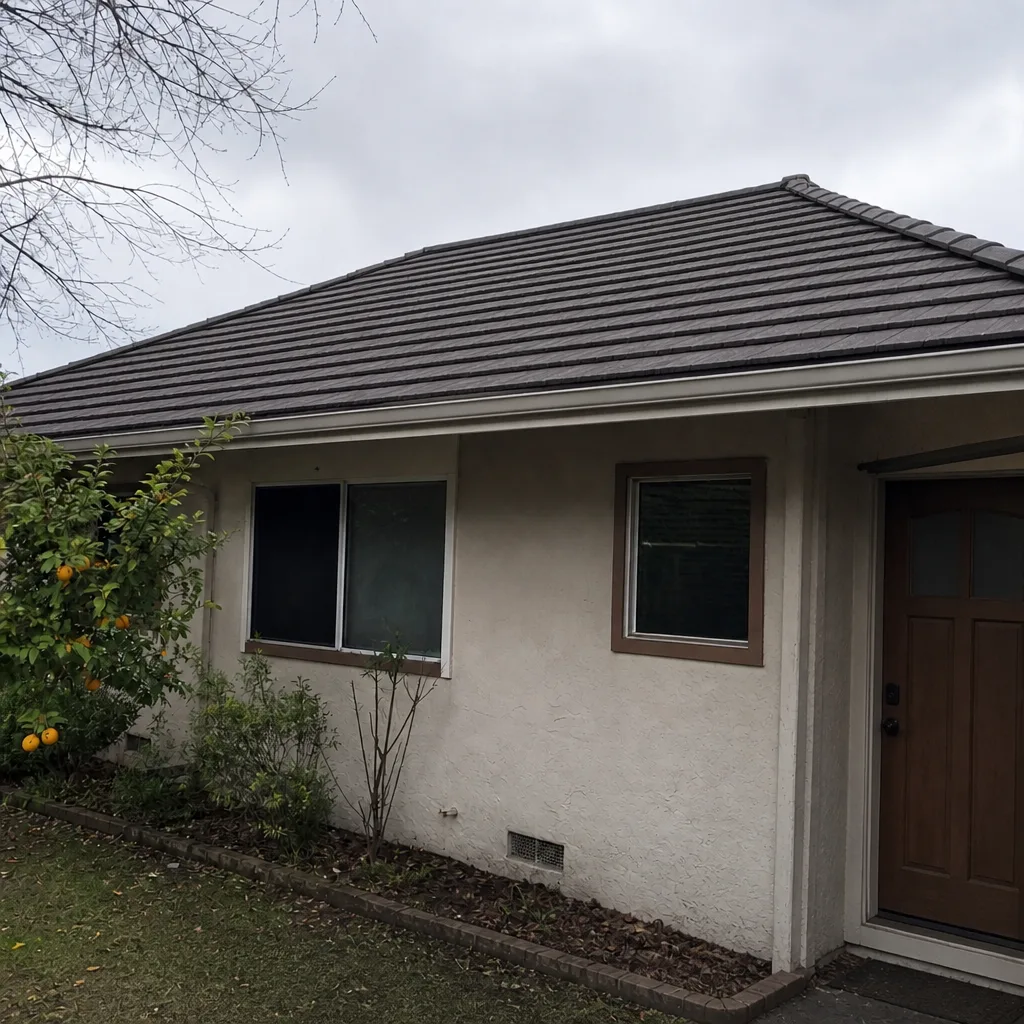 After
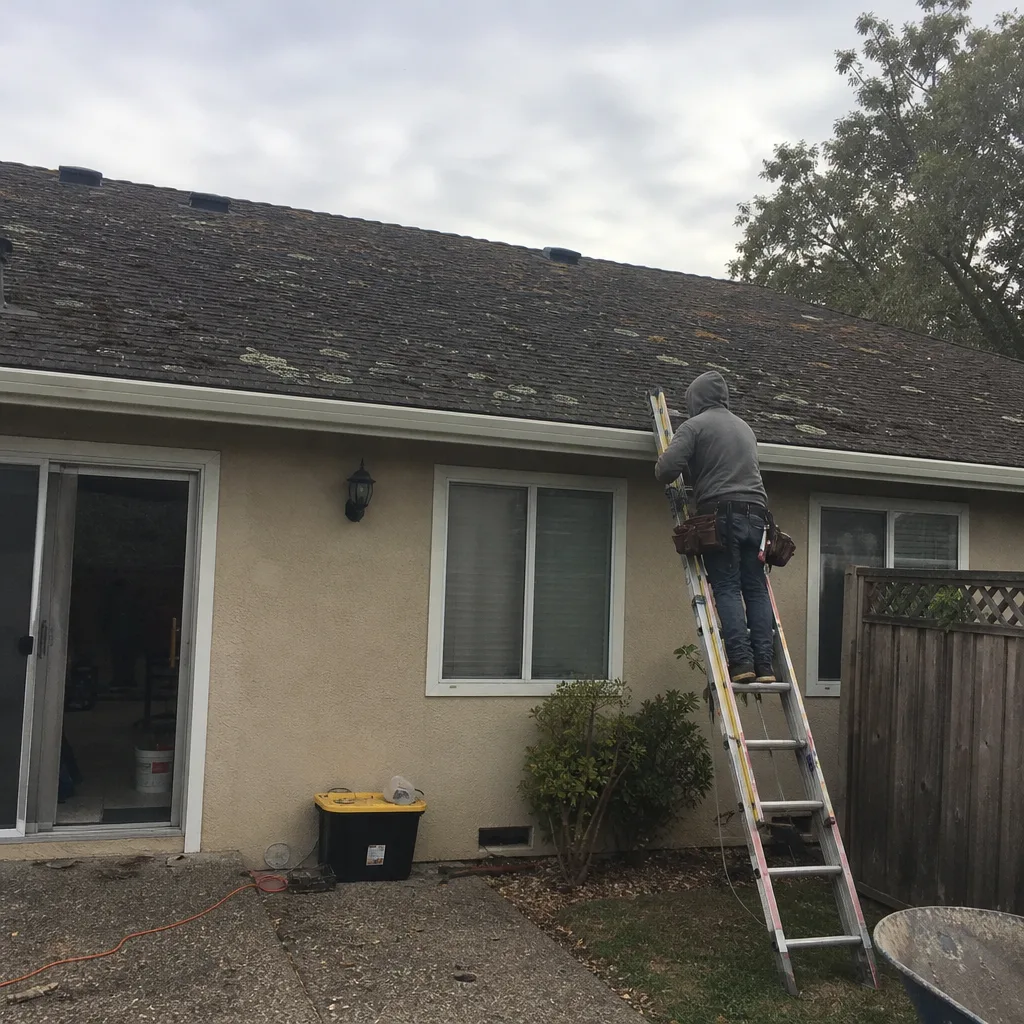 Before
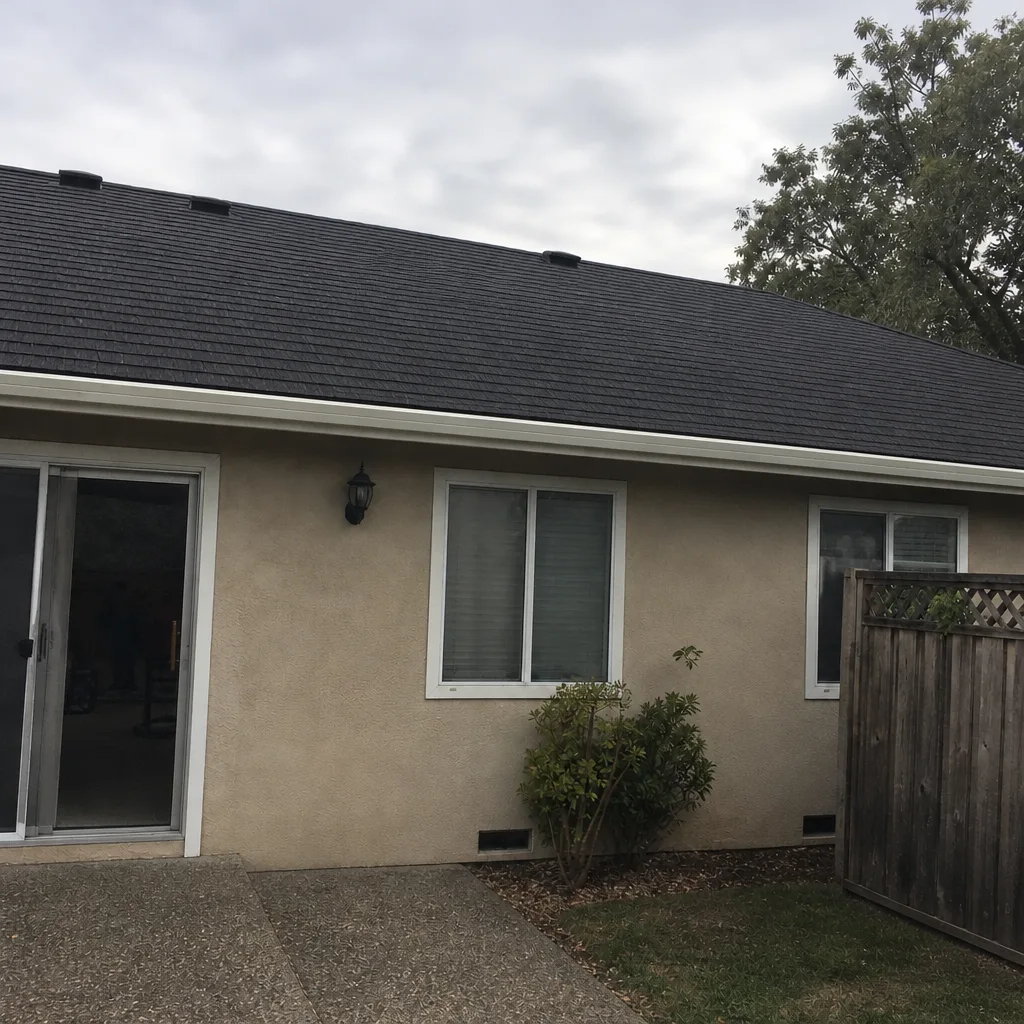 After
When to Call a Professional
Some things are for a trained technician, full stop. Call us if water is coming inside during or after a storm, if you see lifted, missing or cracked shingles, if flashing or pipe boots look compromised, if a flat or low-slope section is ponding water, or if a storm brought down debris onto the roof. Call if you’re facing a decision under pressure and want a calm second opinion, or if you simply don’t know where your roof stands heading into Fremont’s wet season. Denali Roof Repair offers free estimates in Fremont. Call (833) 449-5604. We answer 24/7. Fast dispatch from 7am to 7pm, Sunday through Friday. A first inspection is the honest way to find out what you’re actually dealing with before the next front arrives.
Frequently Asked Questions
Pricing depends on the scope of the job, the material and the access, so it’s set per job by a written estimate rather than a flat figure. A proper inspection first tells you exactly what’s needed, and the written line-item scope fixes the price with no change orders. Call (833) 449-5604 for a free estimate and an exact quote for your roof.
Most significant atmospheric river events give Fremont roughly 48 to 72 hours of warning through weather services. That window is enough to clear gutters and drains, check pipe boots and flashing, test flat-roof drainage, and record your roof’s condition before the storm. Call (833) 449-5604 if you want a professional to survey it before the front moves in.
Reasonable temporary protective measures, documented and reported promptly, are generally treated as reimbursable under a standard policy, but the specifics depend on your insurer and your warranty terms. Keep receipts, photos and dates, and confirm with your insurer. If you need tarping done safely, call (833) 449-5604 for a free estimate.
Get the company’s legal name, check it against the California Contractors State License Board, ask for proof of a valid license, and request a written itemized estimate before any work begins. Decline to sign an assignment of benefits on the spot. Call (833) 449-5604 and we’ll walk you through what a legitimate scope looks like.
Often yes. If the damage is isolated, a targeted repair that fixes the actual failure can restore the roof for years, and that’s the right call. Replacement makes sense only when wear is broad or the roof is genuinely at the end of its life. Call (833) 449-5604 to get that distinction inspected and proven before anyone recommends a full Fremont replacement.
It depends on how heavy the region’s demand is after an event. Roofing demand in Fremont spikes fast when an atmospheric river moves through, so the homeowners who get prompt service usually lined up an inspection beforehand. Call (833) 449-5604. We answer 24/7. Fast dispatch from 7am to 7pm, Sunday through Friday.
The Bottom Line
Roofing emergency preparedness in Fremont is mostly about the calm before the storm, not the storm itself. Clear the gutters and drains, check the pipe boots and flashing, test flat-roof drainage, and document your roof’s condition with timestamps, location context and plain notes. Tarp carefully and only as temporary protection, keep the paper trail for reimbursement, and line up a contractor you’ve verified before you need one. Watch for assignment-of-benefits pressure and unlicensed storm chasers after an event. And when in doubt, inspect first and let the findings, not a sales pitch, decide between repair and replacement.
Denali Roof Repair works across seven major manufacturers, GAF, CertainTeed, Owens Corning, IKO, Atlas, Tamko and Boral, so our material recommendation is driven by your roof rather than a single brand. Inspection, repair and replacement all under one company name, one crew for the life of your roof. Call (833) 449-5604 for a free estimate. We answer 24/7. Fast dispatch from 7am to 7pm, Sunday through Friday.
Written by the team at Denali Roof Repair.