
Last updated November 16, 2026
 Metal roofing
 Architectural shingles
 Tile roofing
 GAF
 Owens Corning
 Flat & low-slope
Free roof inspection with deck photos before we talk money - GAF and Owens Corning certified installation
Roofing Warning Signs: A Fremont Homeowner’s Reference Guide
By the time you can see roofing damage from the curb, the underlying problem has usually been active for six to eighteen months. That’s the uncomfortable truth most warning-sign guides skip. They show you curled shingles and missing granules, but those are late-stage symptoms, not early ones. The signs that matter most in Fremont show up where nobody points a camera: in the attic, on your energy bill, and in how your HVAC system behaves through the summer. This guide maps each of those quiet signals to its likely cause and tells you how fast to act. You’ll learn what to check in ten minutes with a flashlight, when streaking is cosmetic and when it isn’t, and how to sort a warning sign into a thirty-day window, a one-week window, or a call today.
Styles & brands we work with
- Architectural shingles
- Metal roofing
- Tile roofing
- GAF
- Owens Corning
- Flat & low-slope
Quick Answer
The earliest roofing warning signs in Fremont are attic-side, not street-side: dark stain rings that trace a leak path, compressed insulation under a moisture drip, and daylight at a seam or penetration. Energy-bill spikes and HVAC short-cycling can point to roof ventilation trouble before any ceiling stain appears. Exterior signals like algae streaking matter too, but streaking alone is usually cosmetic unless it comes with granule loss, lifted flashing, or exposed underlayment.
Table of Contents
- The Attic Check: Ten Minutes With a Flashlight
- Energy Bills and HVAC Behavior as Roofing Signals
- Fremont Exterior Signals: Streaking, Granules and Flashing
- The Granule-Loss Gradient: Weathering vs. Impact vs. Defect
- Urgency Triage: 30 Days, One Week, or Today
- Common Mistakes to Avoid
- When to Call a Professional
- Frequently Asked Questions
The Attic Check: Ten Minutes With a Flashlight
The attic is where a roof tells the truth. Shingles lie from a distance; the underside of the roof deck doesn’t. Spend ten minutes up there with a bright flashlight and you’ll see signals that a homeowner walking the perimeter of their house will miss entirely. In our experience, the majority of active leaks in Fremont homes are caught in the attic before the homeowner sees a stain on the ceiling drywall.
Here’s what to look for, and what each sign points to:
- Circular or teardrop-shaped dark rings on the rafters or sheathing – these trace where water ran. A ring high on a rafter plane near a chimney or a skylight usually means flashing failure, not shingle failure.
- Broad, diffuse darkening across a section of sheathing – this points to long-term moisture trapping, often from blocked soffit vents keeping the deck damp.
- Compressed or matted insulation below a suspected spot – moisture that drips through and flattens insulation before it ever reaches the ceiling is a sign the leak has been active for weeks, not days.
- Daylight visible between boards or at a penetration – a seam, plumbing boot, or vent pipe that shows light through it from the roof side has lost its seal.
- Dark, crusty material packed in a corner where a roof plane turns – this is where debris and moisture collect, and it’s where valley leaks in Fremont often begin.
Follow the wood uphill from any stain. Water doesn’t fall straight down through a roof; it runs down the slope of the deck, along a rafter, and often emerges somewhere far from the entry point. If the ring is on a rafter, trace that rafter to the ridge and look for the source at the top. A stain on the back of a ceiling joist can come from a leak ten feet away. That’s why cutting out a ceiling stain without a real inspection is a mistake: you’ll repaint and the stain returns.
The ten-minute attic check is not a substitute for a proper roof inspection. It is a way to know whether to schedule one. If you find a ring, a daylight seam, or wet insulation, the answer is yes. If you find nothing but want certainty before storm season, our Denali Roof Repair inspection service is a standalone job, not a dressed-up sales call.
Energy Bills and HVAC Behavior as Roofing Signals
A spike in your summer energy bill or a system that suddenly can’t keep up is often a roofing warning sign in disguise. The roof is a ventilation system before it’s a weather barrier. When that system fails, the house overheats, the attic bakes, and the air conditioning runs longer to compensate. Homeowners in Fremont have been told to blame the HVAC unit when the real problem was insulation displaced by moisture or a soffit vent blocked with debris.
Watch for these signals:
- An attic that’s noticeably hotter than the outdoor air in the afternoon – a properly vented attic runs only slightly warmer than the outside temperature. If it’s a blast furnace, ventilation is compromised.
- An HVAC unit that starts and stops more often than it used to – short-cycling under load can be the unit running out of headroom because the house is overheating.
- Uneven cooling between rooms on the same floor – not a roofing problem by itself, but moisture-compromised insulation in the attic above one area of the house will show up as heat loading in that area.
- Condensation on the underside of the roof deck – this is moisture accumulating where it shouldn’t, and it’s a sign the roof is trapping humidity instead of venting it. If you see it, get it looked at sooner rather than later.
Compromised ventilation doesn’t only show up on the utility bill. It accelerates shingle aging from underneath. When attic heat and humidity can’t escape, the underside of the deck stays warm, which bakes asphalt shingles from inside and shortens their useful life. That’s why a roofing inspection that skips the attic is only half an inspection. In Fremont’s warmer afternoons, a poorly vented roof loses years off its life without a single visible stain.
- On a hot afternoon, compare the temperature in the attic to the outdoor temperature. If it’s dramatically hotter, ventilation is a concern.
- Look for insulation that’s been shoved aside, compressed or dampened near a vent or penetration.
- Look above your HVAC equipment and any interior ceiling near it for water staining on joists.
- Check the soffit vents from the outside: are they clear of debris, insulation and screen blockages?
If your attic overheats and your bills climb but nothing is visibly wrong, an inspection is the honest way to separate a failing ventilation system from a failing roof from a failing HVAC. Those are three separate answers, and guessing between them costs money. If a roofing defect is confirmed, our roof repair team handles the fix.
Fremont Exterior Signals: Streaking, Granules and Flashing
The exterior warning signs in Fremont are real, but they’re slower and easier to over-read than the attic signals. Streaking is the one that worries homeowners most and is the one that most often turns out to be cosmetic. The dark stripes that run down the north and west faces of a roof are algae and airborne spores that colonize the damp, shaded side of a roof. On a Fremont roof, the north and west planes that see less direct sun stay wetter longer and streak first. That doesn’t mean your roof is failing. It means you’re seeing biology, not structural damage.
Streaking crosses from cosmetic to concerning when it comes with any of the following:
- The granules under the streak are gone, leaving the shingle surface smooth and shiny.
- Flashing at a chimney, skylight or wall junction has lifted, cracked caulk, or visible rust.
- The streak comes with a soft, spongy feel in the shingle when you press it near the edge.
- You can see a stain inside the attic directly under that section of roof.
Flashing is the weak point on almost every roof. The field of shingles can last a decade longer than the metal and sealant around a chimney or vent. In our experience, a call about a “leaking roof” in Fremont very often traces back to a penetration flashing, not the shingles. That’s exactly the kind of finding an inspection-first approach turns up before you’re sold a replacement you don’t need. Material variety matters here too. We work across GAF, CertainTeed, Owens Corning, IKO, Atlas, Tamko and Boral, which means someone can match the right shingle, flashing component and ventilation setup to your roof’s actual conditions rather than reach for whatever single brand is on the shelf. That choice belongs to the job, not the inventory.
Walk the perimeter of your home on a clear day and look at the roof plane at eye level. You’re not looking for a perfect roof; you’re looking for change. A lifted corner, a flashing gap, a ridge of soft shingles, a section where the surface has gone smooth – those are signals to get an inspection. If your Fremont home is in a neighborhood where roofers are quoting replacements on the strength of a streak alone, get a second opinion.
The Granule-Loss Gradient: Weathering vs. Impact vs. Defect
Granule loss is the signal homeowners least reliably interpret. Every asphalt shingle sheds granules over its life, and finding some in your gutter or along the downspout isn’t automatically bad news. The question is how much, where, and whether it’s increasing. That’s the granule-loss gradient: a way of reading the evidence to decide whether you’re looking at normal end-of-life weathering, storm or impact damage, or a manufacturing defect that may deserve a warranty claim.
Start by checking where the granules collect:
- Gutter at the bottom of a downspout. A modest, stable accumulation is normal aging. A sudden flush of granular sand after a storm on a newer roof is not.
- Roof plane, close up. On a healthy shingle, you can feel the gritty surface and see granules between the tabs. On a worn shingle, the surface goes smooth and the backing becomes visible.
- Ballast pile or drip edge. Granules that have washed off in a line indicate active water sheeting over the same spot, which points to a drainage or flashing problem rather than shingle failure.
Three patterns, three answers:
- Weathering: granules shed slowly, mostly along the downslope edge of shingle tabs, and the shingle surface still has texture. This is normal aging and does not call for immediate action.
- Impact or storm damage: granules are displaced in a concentrated spot, often with a bruise, dimple or small displaced tab. Hail is uncommon in Fremont, but wind-driven debris and foot traffic during other work can do the same thing. These spots need a proper inspection to confirm they aren’t punched through the mat.
- Defect: premature, widespread granule loss across a newer roof plane, especially if it’s uniform across multiple shingles from the same batch, is worth pursuing as a warranty claim. That’s where multi-brand knowledge matters. We work with GAF, CertainTeed, Tamko and others, so we can identify the product and help you understand what the manufacturer’s warranty says and what documentation the claim needs.
The honest answer on a granule question is usually: it depends on what else is going on. Granule loss plus a stain in the attic is a roof that needs work. Granule loss on a ten- to fifteen-year-old roof with no interior signs is a roof to monitor. A full inspection settles which you have. When it’s time to replace, our roof replacement service covers that too, with a single contractor from inspection through the final inspection pass.
Urgency Triage: 30 Days, One Week, or Today
Not every warning sign is a call today. The framework most homeowners need is a three-tier sort: which signs give you a comfortable thirty-day inspection window, which require action within a week, and which warrant a call right now. Getting this right keeps you from panicking over a cosmetic issue and keeps you from ignoring a problem that costs real money to fix later.
Thirty days – schedule an inspection when it’s convenient.
- Even, non-worsening algae streaking with no interior stains.
- Normal granule accumulation in the gutter on an older roof.
- A single moderate attic stain that is dry and not expanding.
- An attic that runs warm in the afternoon but shows no moisture.
One week – book an inspection soon; the problem is likely active.
- An attic stain with a visible drip path, or wet insulation.
- Lifted, cracked, or rusted flashing at a chimney, skylight or wall.
- Shingles that feel soft or spongy at the edge.
- Granule loss that appeared suddenly after a storm and hasn’t recurred.
- A ceiling stain that is growing or that darkens after a storm.
Today – call and get honest guidance on the phone.
- Water actively coming through a ceiling, a light fixture, or a wall.
- A ceiling that is bulging, sagging, or visibly wet.
- Daylight visible through the roof from inside the attic, or a piece of decking that’s gone soft underfoot.
- Missing sections of roofing material after a storm with the deck exposed.
- Any water in the house near electrical fixtures or the panel.
On the last two, don’t climb on the roof to investigate. Wet roofs and electrical fixtures are not a homeowner job. Stay off, keep the area below clear, and call us at (833) 449-5604. We answer 24/7. A call outside dispatch hours is booked into the next opening, Sunday through Friday, 7am to 7pm. Fast dispatch from 7am to 7pm, Sunday through Friday, is how we handle the urgent tier.
The triage framework is a guide, not a hard rule. If a sign bothers you and you can’t tell which tier it falls into, that’s a reason to get it inspected, not a reason to wait. The cost of an inspection is far lower than the cost of repairing hidden rot after a season of undetected moisture.
Common Mistakes to Avoid
- Judging a roof from the street. The roof you see from the curb is the last thing to fail. The attic, flashing details and deck condition tell the real story.
- Repainting over a ceiling stain before finding the source. A stain on the ceiling is a symptom. Repainting it and calling it fixed is how a small leak becomes a rotten rafter.
- Assuming algae streaking means you need replacement. North and west facing roof planes streak easily in Fremont’s climate. Streaking alone is usually cosmetic until it comes with granule loss or flashing failure.
- Climbing on the roof after a storm to “check it yourself.” Wet shingles are slick, and a fall from a roof is a serious injury. A pair of binoculars from the ground or a professional inspection is the right move.
- Accepting a replacement quote without an inspection report. A proposal that skips the attic and the flashing details is a guess. If a roofer won’t inspect first, get another opinion.
- Clearing soffit vents from inside with a broom handle. You’ll push insulation aside and can damage the vent. Look at soffit vent clearance from the outside; leave the fix to a roofer if it’s blocked.
- Ignoring an energy-bill spike in summer. Bills and HVAC behavior are part of the diagnostic picture. If the house is overheating, the roof and attic are one of the first places to look.
When to Call a Professional
Call when you find an attic stain with a visible drip path, wet insulation, or a seam that shows daylight. Call when flashing at a chimney, skylight or wall junction is lifted, cracked or rusted. Call when shingles feel soft or spongy at the edge, or when granule loss is concentrated and sudden on a newer roof. Call today if water is coming through a ceiling, a light fixture or a wall, if the ceiling is bulging or sagging, or if a section of decking feels soft underfoot. And call if you simply can’t tell which tier a sign falls into. Denali Roof Repair offers free estimates in Fremont. Call (833) 449-5604. We answer 24/7. Fast dispatch from 7am to 7pm, Sunday through Friday. Our technicians have up to 13 years of experience, and we inspect before we recommend anything.
Frequently Asked Questions
Roof inspection is a standalone service with its own written estimate, and that estimate sets the final price. We don’t bundle inspection into a free sales call. Call (833) 449-5604 for an exact quote, and ask for the written line-item estimate before any work is scheduled.
The first sign is usually an attic-side signal: a dark stain ring on a rafter, wet or compressed insulation, or daylight visible at a seam. Exterior signs like streaking and granule loss tend to appear later. If you can see damage from the curb, the problem has often been active for six to eighteen months.
Algae streaking is usually cosmetic. It’s common on the north and west facing roof planes in Fremont because those planes stay wetter and see less direct sun. It becomes a concern when it’s accompanied by granule loss, lifted flashing, soft shingles, or an interior stain. Call (833) 449-5604 for an inspection if you’re unsure.
Weathering is gradual and uniform; storm or impact damage is concentrated in one spot and often shows as a bruise, dimple or displaced tab. Hail is uncommon in Fremont, but wind-driven debris and foot traffic can cause the same damage. A proper inspection confirms whether the damage reaches the deck or stays at the shingle surface.
Most roofing concerns can be fixed with a targeted repair. Repair is a primary service at Denali Roof Repair, not a fallback after a replacement pitch. If your flashing is the problem, a repair will fix it. If the deck or multiple roof planes are compromised, that’s a different conversation. The inspection tells you which. Call (833) 449-5604.
No. The written line-item estimate sets the final price, and we don’t do change orders for work that was in the original scope. If something turns up during the work that wasn’t visible during the inspection, we stop, explain it, and get your written approval before proceeding. Call (833) 449-5604 for a free estimate.
The Bottom Line
The warning signs that matter most in Fremont don’t show up from the street. They show up in the attic with a flashlight, on your energy bill, and in how your HVAC system behaves as the house heats up. Attic stains map to leaks; overheating maps to ventilation; granules in the gutter map to aging, impact or defect; streaking maps to biology that usually isn’t structural. Get comfortable with the triage framework, and you’ll know when a sign is a thirty-day window, a one-week window, or a call today. And get an inspection before you accept any replacement quote. Inspect first, recommend second. That’s how we work. Call (833) 449-5604 to schedule your free estimate. We answer 24/7. Fast dispatch from 7am to 7pm, Sunday through Friday. Seven brand options, one honest recommendation.
Written by the team at Denali Roof Repair.
See the difference
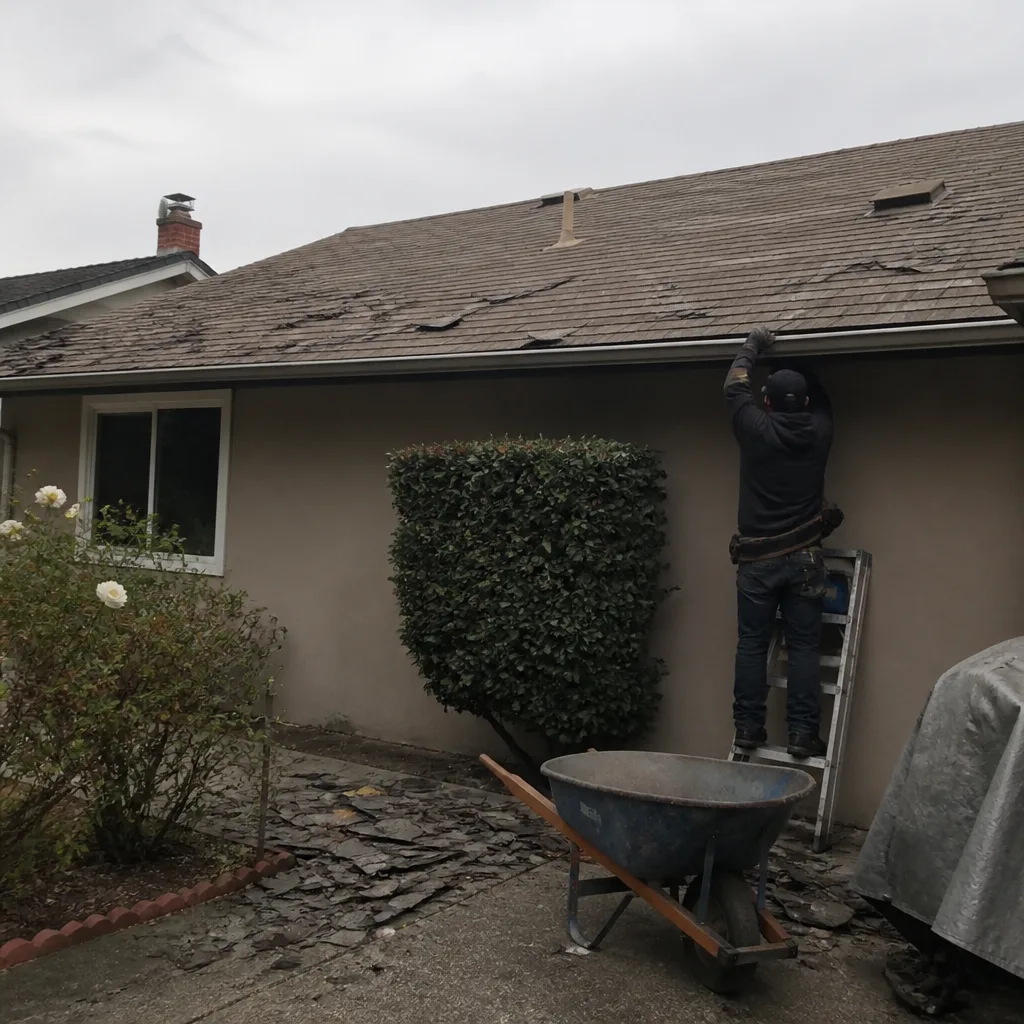 Before
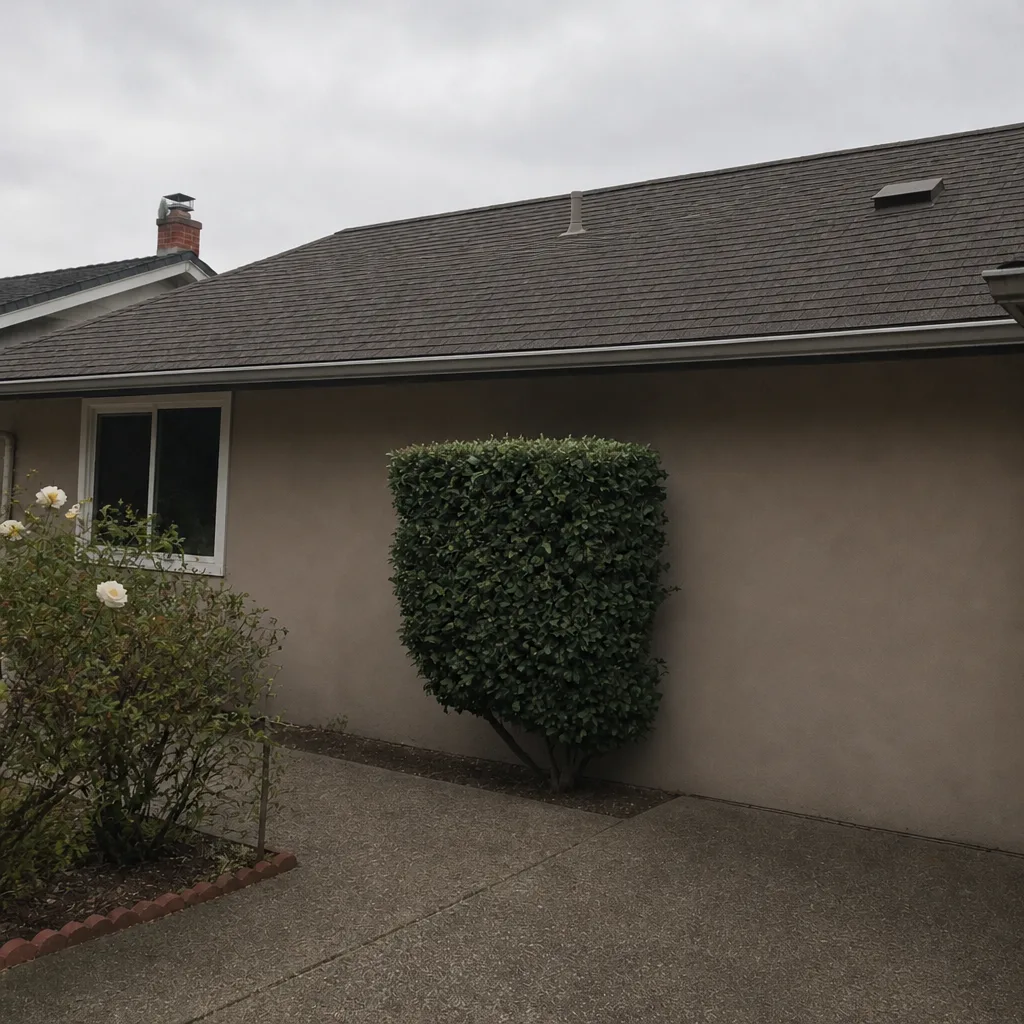 After
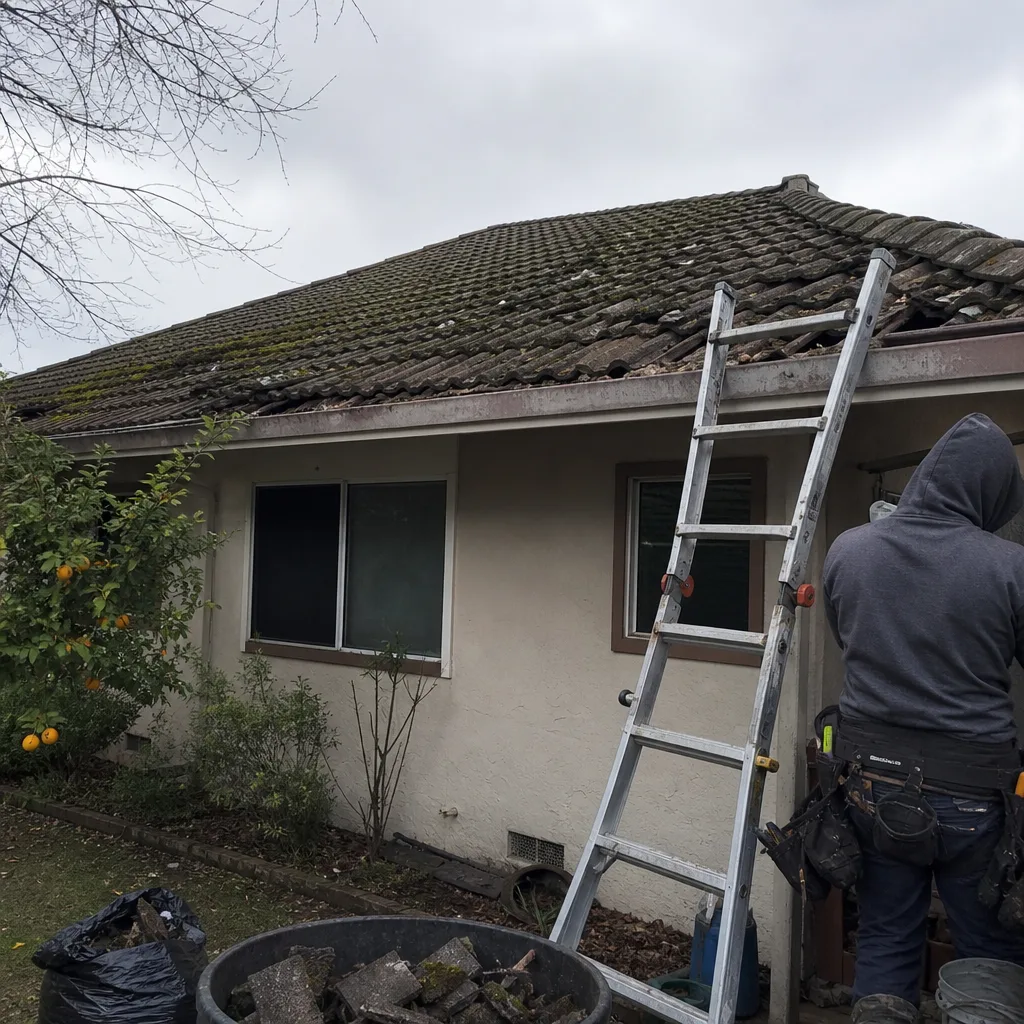 Before
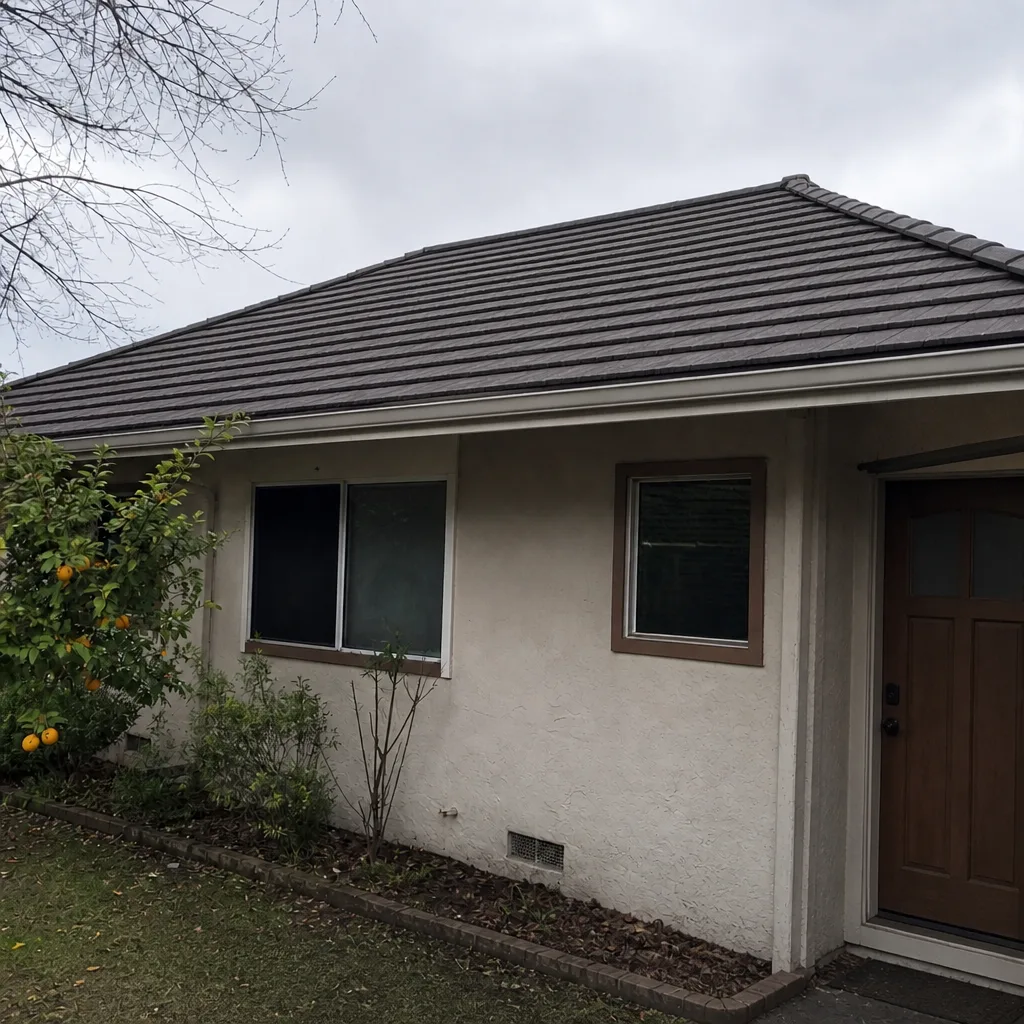 After
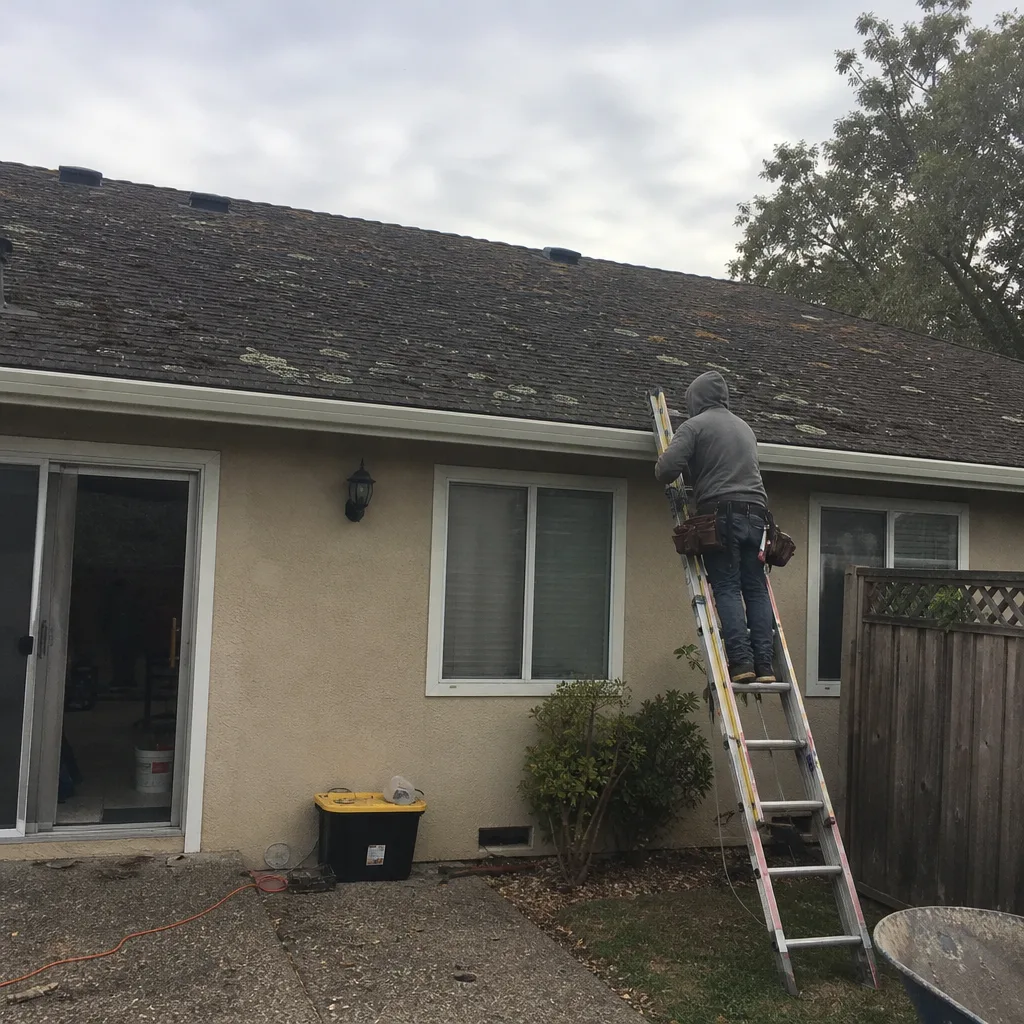 Before
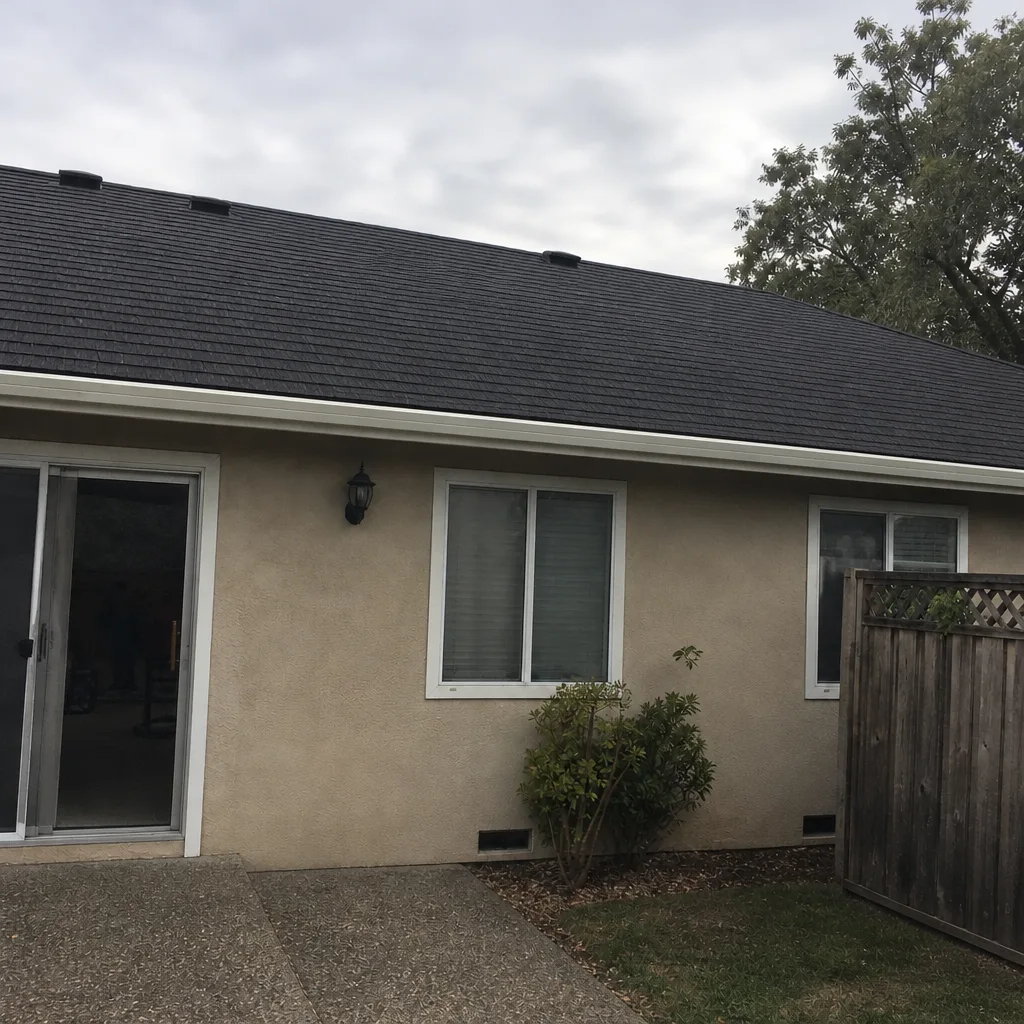 After